

Introduction
As more manufacturers adopt cobot welding safety standards in automated production, the conversation is no longer just about speed or repeatability. It is about how to bring collaborative robots into real welding environments without creating new risks for operators, technicians, and nearby equipment.
Cobots have made automation more flexible, especially in fabrication settings where product mix changes often and floor space matters. But flexibility does not remove the need for structure.
What safety standards actually matter when deploying cobots for laser welding?
That question matters because safe cobot integration rests on three connected pillars: regulatory welding safety standards, laser-specific hazard controls, and a documented cobot risk assessment before the system ever goes live. When those three elements work together, manufacturers can improve throughput while still protecting workers, maintaining compliance, and designing welding cells that perform reliably under daily production conditions.
Understanding Cobot Welding Safety Standards in Industrial Welding Cells
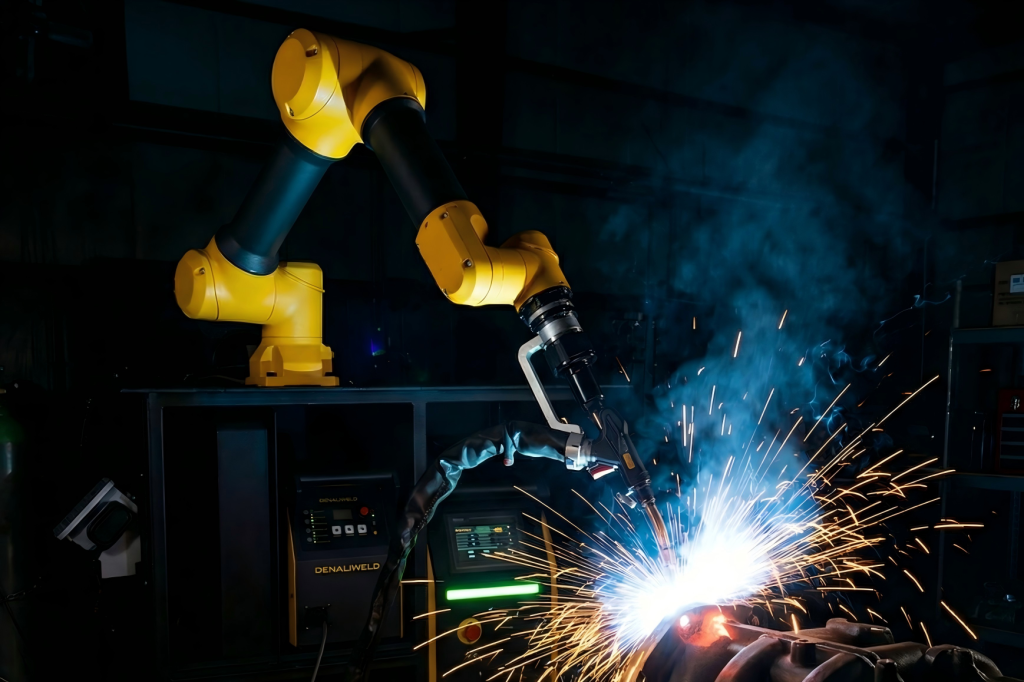
At a practical level, cobot welding safety standards refer to the rules, design principles, and operating controls that allow collaborative robots to work around people without treating the cell like a conventional fully isolated robot station. That does not mean a cobot is automatically safe in every setting. It means the system must be designed so that motion, interaction, and exposure are controlled in a measurable way.
Traditional industrial robots are usually separated from people by fixed guarding, fenced cells, or exclusion zones. Cobots are different because they are intended for some degree of human interaction. In welding applications, that interaction may involve loading parts, checking fit-up, adjusting fixturing, or sharing space near the automated process. Even so, collaborative capability does not eliminate hazards. A welding cell still contains heat, sparks, fumes, electrical energy, and in laser applications, additional beam-related risks.
This is why manufacturers still rely on core collaborative safety principles such as controlled motion, safety-rated monitoring, and workspace separation where required to support cobot welding safety in active production environments. A well-designed system may slow the robot when a person approaches, pause movement when a zone is breached, or limit operation to defined conditions that reduce the chance of harmful contact.
When explaining how collaborative systems are engineered for safer human interaction, it is useful to look at Denaliweld’s overview of manufacturing cobots for safety. The broader point is that safe collaboration is not achieved by the robot arm alone. It comes from the full cell design, including programming logic, sensor placement, guarding strategy, and operator procedures.
Regulatory guidance still matters as well. Welding operations must account for ventilation, personal protective equipment, and fire prevention measures associated with hot work, as outlined in OSHA welding, cutting, and brazing requirements. Those requirements remain relevant whether the torch or laser head is hand-operated or mounted on a collaborative robotic arm. A cobot may change how the task is performed, but it does not remove the responsibility to control the hazards that surround the process.
Laser Welder Safety Requirements for Collaborative Systems
In any discussion of collaborative automation, laser welder safety requirements deserve special attention because laser welding introduces hazards that go beyond standard arc or resistance processes. The most obvious concern is laser radiation exposure, but that is only part of the picture. Reflected beams, stray energy, hot surfaces, molten material, and welding fumes can all create serious risks if the system is not engineered correctly.
One reason laser welding demands tighter control is that the hazard is not always obvious to the naked eye. Reflections can travel unexpectedly from shiny surfaces, and beam exposure can cause damage even when the operator is not standing directly in the main process path. In a collaborative environment, that raises the stakes. The cell must be designed to control both human access and beam containment at the same time.
Manufacturers typically address these risks through layered engineering controls. Enclosures and shielding help contain the process. Laser interlock systems can stop operation when access panels or doors are opened. Safety-rated monitoring systems help manage robot motion and occupancy in shared spaces. Together, these controls reduce the likelihood of unintended exposure while supporting consistent production.
For a closer look at established industrial practices, Denaliweld’s guide to laser welding standards, safety, quality, and performance provides useful context for how laser welding systems are managed in real production environments. The important takeaway is that collaborative operation does not justify lighter controls. In many cases, it requires more deliberate design because the system must account for both process hazards and human proximity.
Protective equipment, ventilation planning, and safe operating procedures also remain essential. Even in highly automated cells, workers may still enter the area for setup, maintenance, inspection, or troubleshooting. That means the safety strategy must cover the full lifecycle of use, not just normal welding cycles, especially when meeting laser welder safety requirements in collaborative applications.
Conducting a Cobot Risk Assessment Before Deployment
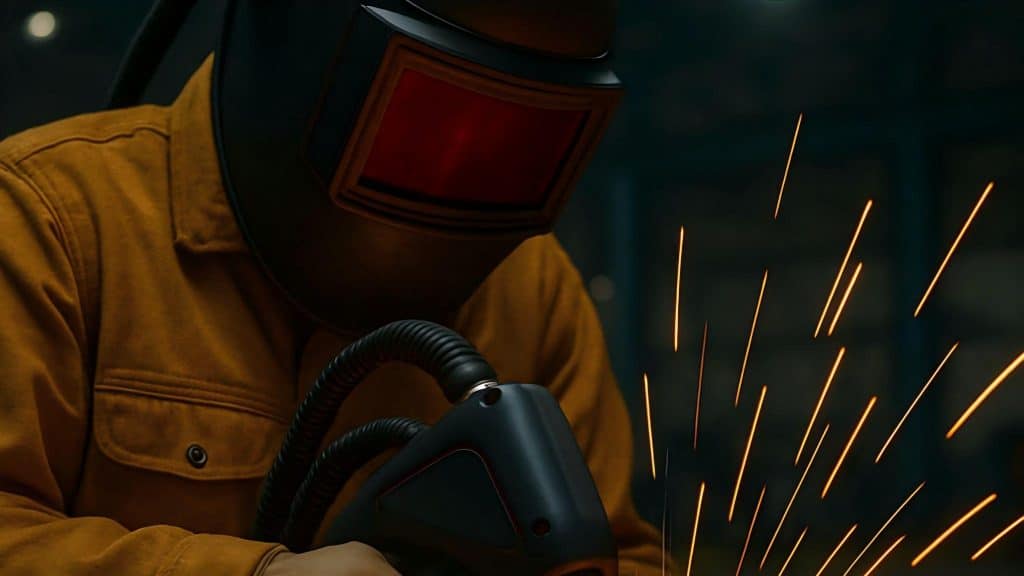
Before any collaborative welding system is placed into operation, a formal cobot risk assessment should define what could go wrong, how likely exposure is, and which controls are required to reduce the risk to an acceptable level. This step is not paperwork for its own sake. It is the process that connects theory to the actual working conditions on the shop floor.
A typical assessment begins with hazard identification. In a welding cell, that can include laser exposure, hot material, sparks, electrical risks, pinch points, and airborne contaminants. From there, the team evaluates exposure: who could encounter the hazard, during which tasks, and how often. Severity is then considered alongside the likelihood of occurrence. Only after that analysis can the right mitigation plan be defined.
In collaborative welding systems, mitigation often includes safety scanners, light curtains, protective barriers, emergency stops, and operational speed limits that reduce robot motion when workers move closer to the cell. In some cases, the safest approach is partial separation rather than unrestricted sharing of the workspace. That is an important distinction. Collaboration should be designed around the process, not assumed as a default feature.
A strong assessment also looks beyond routine production. Setup, cleaning, maintenance, nozzle changes, fixture adjustments, and fault recovery can expose personnel to risks that are not present during normal automated operation. If those scenarios are ignored, the system may appear compliant on paper while remaining vulnerable in day-to-day use.
Most importantly, risk assessment helps align the welding cell with applicable regulations and accepted industry practices. It gives manufacturers a defensible basis for deciding where sensors belong, when barriers are needed, how operators should be trained, and what procedures must be followed before work begins. In other words, it is the discipline that turns cobot welding safety standards into something usable and enforceable.
Conclusion
Safe collaborative welding is not built on a single device or a single rule. It depends on understanding the role of cobot welding safety standards, applying the right controls for laser processes, and completing a structured cobot risk assessment before deployment. When manufacturers combine regulatory guidance, engineering safeguards, and careful planning, cobots can support productivity without compromising worker protection.
That balance is what makes collaborative automation valuable in modern fabrication. The goal is not simply to automate welding. It is to automate it in a way that remains controlled, practical, and sustainable over time.
To explore safer cobot integration strategies and welding automation solutions, visit Denaliweld and review its resources on collaborative system design and laser welding safety.