



FAQ
General FAQs
What Is The Warranty For DenaliWeld Machines?
We will provide a 3-year warranty on the entire DenaliWeld machine, during which the customer will receive full and prompt service. In case of non-human damage, DenaliWeld will send spare parts free of charge to replace any damaged part on the machine.
Can I Get DenaliWeld’s Services Overseas?
DenaliWeld can provide overseas service including installation, commissioning, training and maintenance to customers all over the world.
How Can I Become One Of The DenaliWeld Agents In My Country?
To become an authorized Denaliweld Agent, please submit an application through the “contact us” tab expressing your interest in representing our products in your country. We’re looking for partners with strong local market knowledge, established distribution capabilities, and a commitment to quality and customer service.
Warranty FAQs
How do I contact the DenaliWeld dealer in my local city?
If you would like to contact your local DenaliWeld agent, you can send an email to [email protected], or submit a form and we will ask them to contact you directly. You can also check whether there is a local dealer through our dealer locator. We usually indicate the dealer’s contact information.
What is the shipping method for DenaliWeld machines?
If a customer orders a small machine with wooden packaging, we will deliver the machine in a consolidated container, or if the customer orders two or more machines together, we will ship them in a container and send it to the port, which will help the customer save even more money.
What about the quality of DenaliWeld machines?
We have a world-class R&D team to support the quality of our machines, and our products are CE and SGS certified, proving the advantages of DenaliWeld machines.
Equipment related FAQs
I. Machine Cannot Power On (No Power, Screen Off, Fan Not Running)
If the laser welding machine has no power and cannot start at all (screen off, fan not running), please troubleshoot according to the following steps based on your actual situation:
1) Basic Power Supply Check (Most Common Cause)
Check whether external power is available and measure the input voltage.
Use a multimeter to measure the input voltage at the power inlet:
- Single-phase 220V
- Three-phase 380V
- Three-phase 480V (depending on machine model)
If there is phase loss (for example, one phase missing in a three-phase supply) or incorrect power input, the machine will not start.
2) Check the Main Power Rotary Switch
Ensure that the rotary power switch on the rear panel of the machine is turned ON.
3) Check the Emergency Stop Button
Check the red emergency stop (E-STOP) button on the front panel.
- If the emergency stop is pressed, the main power of the machine will be cut off.
- Rotate the button clockwise to release and reset it.
⚠ Warning: The following steps involve high voltage. Non-professionals must not operate to avoid electric shock.
4) Check Wiring After the Emergency Stop
nspect whether the wiring behind the emergency stop button is loose.
5) Check Internal Fuses
After powering off the machine, open the cabinet (only if user maintenance access is allowed).
Locate the fuses at the power input of the main control board.
If the fuse is blackened or blown, replace it with a fuse of the same specification.
6) Check the 24V Power Supply
The welding machine uses an internal 24V switching power supply to power the control system.
If the 24V power supply is damaged, the entire machine will fail to power on.
II. Machine Powers On but Laser Does Not Start
The machine can power on and the screen lights up, but the laser does not start after turning the key switch
(the laser indicator lamp flashes red and green alternately, and red aiming light is visible at the output).
1) Check the Key Switch
Ensure the key switch is properly inserted and turned to the “ON” position.
2) Safety Door or Gas Pressure Issue
- The safety door is not connected
- Or shielding gas pressure is too low
Symptom: External alarm displayed on the screen.
3) Check Wiring After the Key Switch
Inspect whether the wiring behind the key switch is loose.
4) For Machines Above 3kW
Check whether the main power supply has phase loss.
III. Welding Process (Quality) Issues
These are the most intuitive problems during operation and directly affect product quality.
1) Blackened Weld Seam (Severe Oxidation)
Cause:
Shielding gas (usually nitrogen or argon) does not fully cover the high-temperature welding area, gas flow direction is incorrect, or the gas is impure (contains oxygen).
Solution:
- Check whether gas flow is sufficient (typically 25–30 L/min)
- Check whether the gas nozzle is blocked, or increase post-flow gas time
- Replace the gas cylinder and test again
2) Porosity / Spatter (Blowholes)
Cause:
Oil, rust, or moisture on the base material surface, or impure shielding gas.
Solution:
- Clean the workpiece thoroughly before welding; check for gas leaks that may allow air to enter the gas line.
- Check wire feed speed if it’s too high/fast, slow down refer to pre-setting suggestion.
- Check filler metal if is correct.
3) Lack of Penetration (Weak Weld)
Cause:
Burnt optics, incorrect focal position, improper laser power settings, or excessive wire feeding speed.
Solution:
- Check whether the lenses are damaged, especially if welding quality suddenly deteriorated
- Check whether the focus scale tube is set at the zero position
- Select welding parameters from the process library according to material thickness, and fine-tune gradually
- Check wire feeding speed (typically around 0.5 inch/min)
4) Burn-Through
Cause:
Laser power is set too high, causing the base material to be over penetrated.
Solution:
Reduce laser power (refer to process library), and slightly increase wire feeding speed.
5) Undercut (Depressions on Both Sides of the Weld)
Cause:
- Excessive laser power
- Oscillation width too wide, preventing filler metal from filling the weld
- Welding wire diameter too small
Solution:
- Reduce laser power
- Use a larger-diameter welding wire
- Use a dual wire feeder system
6) No Oscillation (Straight Line Welding Only)
Cause:
Galvo motor stopped or oscillation width not set.
Solution:
Check and Ensure wobble switch is engaged. By following “Home”→“Setting“→”Galvo Setting”, you will find the button “Wobble On/Off”. Turn it “On”.
- Check whether oscillation width is set to zero
- Check whether oscillation coefficient was mistakenly set to zero
- Check whether motor cables are loose (motor connector approx. 1.5 m behind the welding head and DB15 connector on control board)
- Motor failure – replace oscillation motor or welding head
- Contact manufacturer service support
IV. Welding Head & Consumable Parts Issues (High-Failure Area)
1) Laser Power Drops After 1–2 Seconds
Cause:
Optical lenses are burnt (sometimes not severely damaged).
Solution:
Inspect lenses in sequence:
Front protective lens → second protective lens → focusing lens → reflective lens → collimating lens → QBH protective window.
2) Sudden Welding Quality Deterioration
Cause:
Burnt optical lenses.
Solution:
Inspect all optical components in the same sequence.
3) Frequent Protective Lens Damage
(1) Outer Surface Damage
Symptoms:
Protective lens fails frequently, laser output weakens, black spots or cracking on the outer surface, excessive heat on Scale tube (Usually it will trigger the temp. alarm).
Cause:
Spatter rebounding onto the lens due to:
- Anti-spatter copper nozzle not properly installed
- Welding angle too vertical
- Insufficient or impure shielding gas
- Mismatch between welding wire and base material
- Dust contamination during lens replacement
Solution:
- Adjust welding angle (typically ~45°)
- Ensure sufficient gas flow (25–30 L/min), replace gas cylinder if needed
- Use welding wire compatible with base material
- Replace contaminated lenses immediately; avoid dusty environments
- Use long focal length lenses and scale tubes if available
(2) Inner Surface Damage
Symptoms:
Frequent lens damage with black spots on inner surface, severe cases damage lens seals and other optics.
Cause:
- Internal optics damaged, causing uneven laser transmission
- Abnormal oscillation of galvo motor, excessive scan angle
Solution:
- Inspect internal optics thoroughly
- Check grounding, interference from nearby equipment, motor wiring, and galvo motor condition
- If soot is found, contact manufacturer.
4) Copper Nozzle Overheating or Damage
Cause:
- Laser hits the nozzle due to misalignment or lens damage
- No shielding gas or insufficient shielding gas
- Incorrect welding angle combined with material reflection
Solution:
- Check whether red aiming light is centered on the nozzleopening; adjust laser center offset if needed
- Enable gas output via control screen and verify gas flow
- Adjust welding angle to direct reflections away
V. System & Environmental Alarms
1) Water Chiller Alarm
Refer to alarm codes displayed on the chiller.
(1) Flow Alarm
Cause: Bent hoses, faulty pump, or contaminated water
Solution: Check hoses, water flow, replace water or pump
(2) High-Temperature Alarm
Cause: Dust-blocked condenser, fan/compressor not running, refrigerant leakage
Solution: Clean condenser, check fan/compressor, contact service if refrigerant leaks
(3) Low-Temperature Alarm
Solution: Allow system to preheat; chiller will automatically warm water
(4) Low Water Level Alarm
Solution: Add water to the tank
2) Laser Condensation (Critical Hazard)
Phenomenon:
Occurs in humid environments; water droplets appear inside laser source or on optics.
Consequence:
Laser emission with condensation can instantly destroy fiber or crystal components.
Solution:
Set chiller temperature close to ambient (typically 22–26 °C).
Start chiller first and confirm no condensation before powering on the laser.
3) Ground Clamp Failure
Symptom:
Interlock not engaged, yellow indicator on welding head off, no laser or gas output.
Solution:
Check ground clamp continuity, wiring, safety module, and control board.
4) No Laser Output When Trigger Is Pressed
Solution:
Check grounding, red aiming light, tri-color indicator status, alarms, trigger signal, and sensor connections.
5) Monitoring Screen Warnings
(1) Galvo Alarm
Check 15V power, motor wiring, DB15 connector, and motor condition.
(2) External Alarm
Check safety door, gas pressure, and handle E-STOP.
(3) Touch Screen–Laser Card Communication Alarm
Check communication cables, 24V/15V power supplies, and electrical interference.
6) Tri-Color Indicator Red Light (Laser Alarm)
Connect a PC to the laser using RS-232 cable and diagnostic software to identify alarm details.
Common alarms include QBH loose connection, laser overheating, expiration lock, or cooling issues.
7) Fiber Breakage
Cause: Excessive bending, twisting, or pulling of the fiber cable.
Solution: Contact manufacturer for factory repair.
⚠ Note: Do not excessively bend, twist, or pull the yellow fiber cable when moving the machine.
8) High Welding Head Temperature
Cause: Optical lens contamination or damage.
Solution: Inspect and replace lenses if necessary.
VI. Wire Feeding Issues
1) Wire Feeder Powered but No Wire Feed During Welding
Solution:
- Ensure wire feeder switch is enabled on the machine screen
- Check correct wire installation
- Inspect wire liner for blockage
2) Wire Feeder Feeds Automatically
Cause: Electrical interference or internal fault.
Solution:
- Improve grounding (independent grounding recommended)
- Replace wire feeder for testing
- Contact manufacturer support
Does Laser Welding Really Work?
After a lot of DenaliLab tests, third-party tests, and actual applications, we can confirm that under the correct operation method and parameter settings, laser welding can fully meet user needs in terms of welding quality according to standards of AWS (USA) and EN-ISO (EUROPE). Denaliweld can show you our WPRQ test report, and our engineers can answer your questions and even provide free training on laser safety and welding operations. For more material welding, equipment operation, etc., please visit our YOUTUBE channel.
Can I Use It If I Don’t Have Welding Experience?
Denaliweld is constantly updating and improving the operating experience of our equipment to provide the simplest welding solution for new users. Our equipment has more than 120 parameter presets. You only need to simply select the serial number, and the equipment will complete all the settings for welding the corresponding materials for you. We call it "one-click play". We have verified each welding preset parameter for you and have a complete WPQR test report, which can help you get high-quality welds that meet AWS and EN-ISO standards. You don't need to have rich welding experience, just watch our video or user manuals, and you can perform high-quality welding in about ten minutes. If you have more questions, please contact us, our engineers will provide you with free online training and support.
Worried About Laser Safety?
At Denaliweld, you are protected.
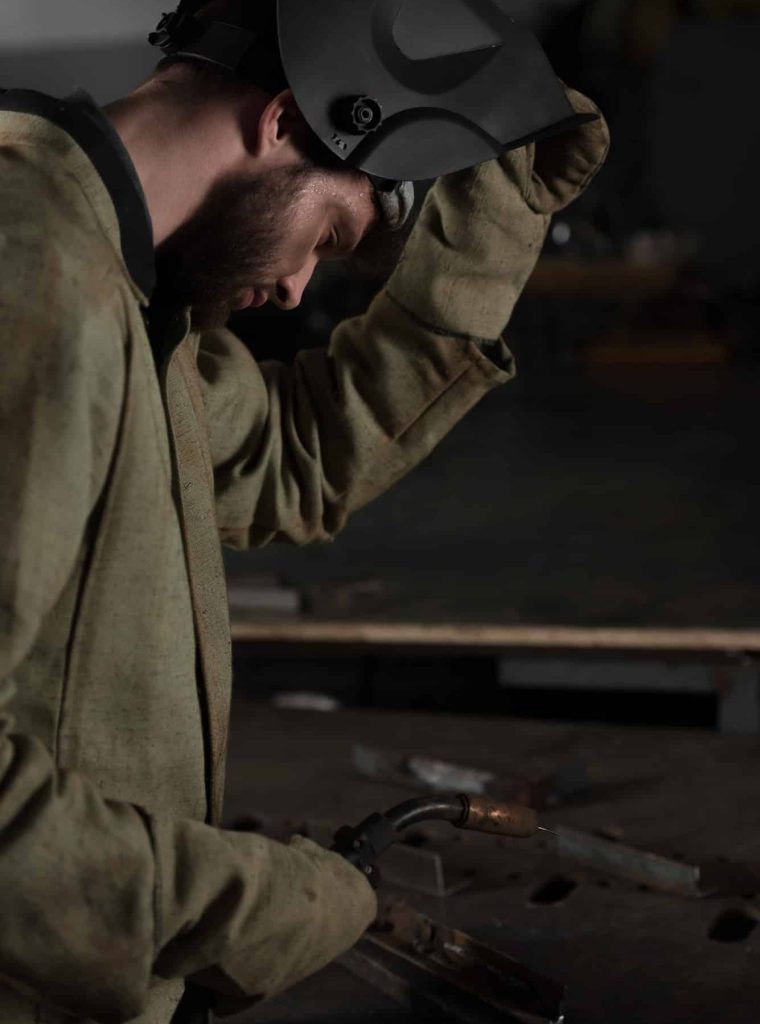
If you are using the machine for personal use, in your garage, studio, etc., and there are few visitors, our machine itself is equipped with laser welding protective helmets and protective clothing, which are enough to ensure your work safety. Of course, you also need your own welding heat-insulating gloves.
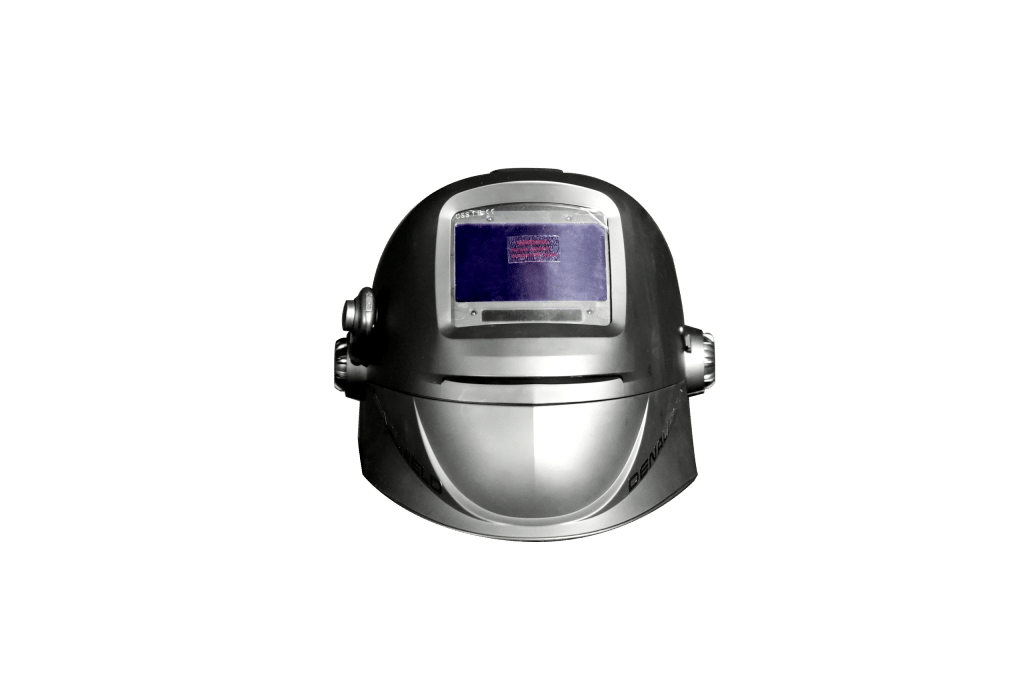
If you are using the machine for a company, but you are the only authorized machine operator, then we recommend that you use the equipment in a relatively independent space and post warning signs to remind people around you. In this case, we recommend that you use a welding helmet with a safety shutter, which can be connected to the Denaliweld machine. When you lift the helmet, the machine will automatically stop the laser.
If the machine has multiple operators or frequent visitors, we recommend choosing our Denaliweld Station. This is a large aluminum enclosed workstation equipped with CE-standard laser protection glass and a safety door. Visitors can watch from outside the workstation without worrying about reflection/scattering of the laser, and a safety door connected to the machine can interrupt the machine’s laser output when the door is opened.
Denaliweld has passed SGS’s MD and EMC testing.
CONTACT US
INTERESTED IN DISCUSSING?
Customize a solution to your needs today Experience a live demo and get free samples