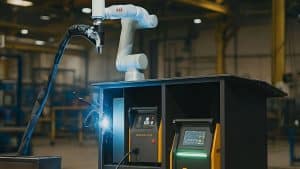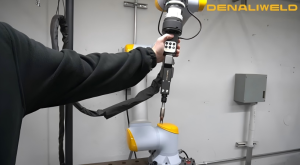


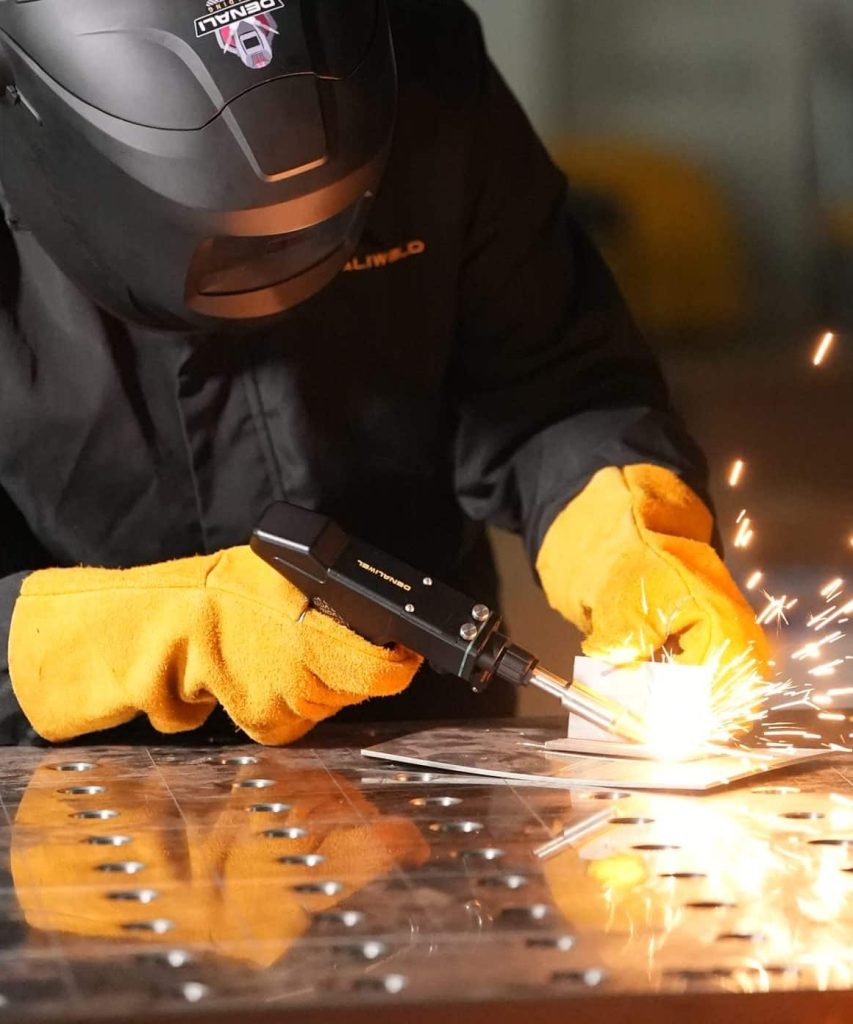
In the world of manufacturing, choosing the right cobot company is important, since the rise of industrial cobot welding is rapidly reshaping the industry. The bad news is that skilled labor becomes harder to find, and production needs grow rapidly and tremendously.
But with cobots—or collaborative robots, you can maintain high-quality welds, get efficiency boosts, and reduce errors in your production. However, not all cobots are equal, so you’ll need to select the right supplier to ensure a smooth implementation and help you maximize the benefits.
In this article, we’ll delve into every factor and consideration you’ll need to take note of before you invest in cobot welding technology.
The Checklist of Considerations
1. Evaluate Your Welding Application Requirements
First things first: start by understanding the specific needs of your operation. Cobots excel in different, flexible production settings. For example, they can run particularly low to moderate volume production with a high mix of products.
With this in mind, cobots are ideal for manufacturers and industries that need adaptability rather than a high-volume and repetitive welding process. When assessing your application, think about the following:
- Your production volume and mix suitability:Ensure the cobot can actually handle your standard batch sizes and product variety.
- Workpiece size, geometry, and accessibility: The robot’s reach and payload must be able to accommodate the parts you weld most often.
- Preferred welding processes:Do a verification process to ensure your chosen welding method, whether MIG, TIG, or spot welding, is cobot-compatible.
- Future growth and flexibility: Ensure space for changes in production growth. With a scalable system, you can prevent premature system obsolescence and protect your investment.
2. Assess Technical Specifications of Cobot Systems
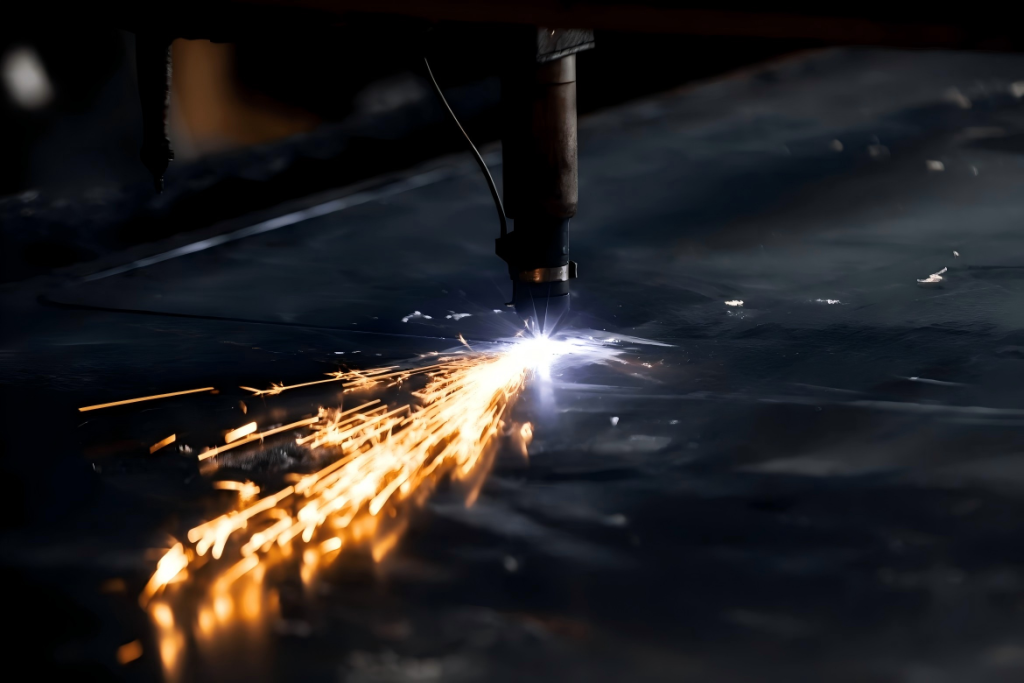
Once you’re done defining your application requirements, you’ll need to evaluate the technical capabilities of your potential cobot. By partnering with a reliable cobot welding robot provider, you can ensure the robot can consistently meet your key performance indicators.
Key specifications worth evaluating include the following:
- Payload capacity: Choose a cobot that can easily handle the welding torch, cables, and any additional tools or equipment.
- Arm reach and degree of movement: Confirm that the cobot can access all weld locations and can reach various degrees and angles on your parts.
- Accuracy, repeatability, and reliability: Ensure the robot can actually produce high-quality welds, as high-quality output is dependent on precise, repeatable motion.
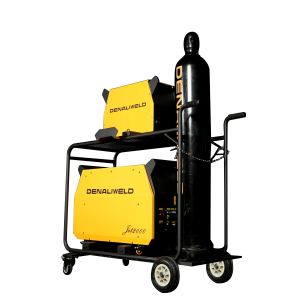
- Compatibility with power sources: Check whether the bot can integrate with your existing welding equipment or if it can provide compatible options.
- Software usability and programming flexibility: Check if it has an intuitive interface, hand-guiding options, or pre-programmed templates to speed up operator training and fast-track bot deployment.
- External axis integration: If you have larger or more complex workpieces, ensure that the cobot can coordinate with external axes to process multi-axis motion without running into a performance bottleneck.
3. Research Supplier Credentials and Reputation
Not all cobot companies offer the same level of sophistication in developing cobots that excel in welding automation. So when evaluating one, choose companies with specialized experience in cobot welding, rather than just general industrial robotics solutions.
You can peek through a company’s reputation by going through customer testimonials and reviews, comprehensive case studies, and references from similar industries. Apart from product authenticity and quality, you’ll need to determine if their support and operator training are sound.
For example, a responsive technical support team and easily-accessible customer service are clear indicators that any future issues can be resolved as quickly as possible.
Comprehensive operator training programs are also essential, as welder-operators unfamiliar with cobots require detailed and extended training to gain the confidence needed to operate the cobot effectively from day one.
You also need to verify if the supplier complies with safety regulations. Your cobot must feature force-limiting technology and emergency stops, so they actually complement workplace safety standards and decrease the likelihood of any injuries and damages.
4. Consider Financial and Investment Factors
Investing in industrial cobot welding requires meticulous financial planning, as cobots entail an oftentimes high upfront cost. When looking at suppliers, always take into account transparency in prices.
Look for suppliers who clearly outline costs across different system configurations, whether it’s a basic, advanced, or complex system. Also consider the total cost of ownership, which includes maintenance, consumables, potential downtime, and software updates apart from the upfront purchase price.
Additionally, take into account a realistic ROI figure by factoring in labor cost savings, reductions in scrap, and improvements in the output. Also, evaluate whether the system is scalable—a flexible cobot solution should be able to support new tasks or increase production volumes without needing a complete system replacement.
Do take note that if the system isn’t scalable as your production demands grow, the system can become obsolete if it’s not upgradeable. A scalable system means better savings in the long run, as you only resort to minimal upgrades compared to an outright full system replacement.
5. Evaluate Safety Features and Compliance
Workplace safety is non-negotiable, regardless of whether you stay with manual welding or with the assistance of welding cobots. Fortunately, cobot companies nowadays design their modern cobots with integrated sensors, force limits, and collaborative features to allow them to work side-by-side with human operators.
Assessing potential suppliers’ stance on regulatory compliance and workplace safety is also important—unfortunately, cobot operations can still pose an injury risk, regardless of technological features, so a supplier’s solid commitment to safety regulations means a safer and better workplace for your operators.
Also, take into account system-level safeguards so you virtually minimize risks in shared cobot and operator spaces—which ensures the cobot performs at its finest, and your operators are safe and sound.
6. After-Sales Service and Supplier Partnership
Your relationship with a cobot welding robot provider should not end the moment you buy a unit. Reliable after-sales service is critical, especially when maintaining consistent operations. With this in mind, check your potential suppliers to see if they have available local or regional technicians you can count on for timely support, regular maintenance, or emergency repairs.
Also, check warranty and service agreements covering both hardware and software—both hardware and software can run into errors, and sometimes a software error can be harder to deal with.
Additionally, review the supplier’s policies for software updates and licensing—both help keep the system reliable, secure, and up to date. Your supplier should also offer flexibility in the form of customizable solutions to meet the unique needs of your production environment.
7. Integration and Deployment Support
A successful industrial cobot welding deployment goes beyond just choosing the right robot—it needs a seamless integration with your existing factory environment. With this in mind, the cobot should be compatible with current power sources, other tools and equipment, and weld fixtures.
A reputable cobot company should be able to offer close assistance with welding cell layout and workflow optimization, so you can achieve maximum operational efficiency from day one. Ongoing support is also critical, which includes calibration, preventive maintenance, and troubleshooting.
With proper integration and expert deployment assistance, you can reduce your system’s downtime, prevent expensive mistakes, and allow your welder-operator team to fully exploit the cobot’s capabilities.
8. Common Pitfalls to Avoid
It’s not unheard of for manufacturers to run into common pitfalls when implementing and deploying cobots. For example, choosing cobots with short reach or lighter payload can limit usability if your needs are much more complex. This hurts productivity and increases output delays.
Also, underestimating the need for operator training and management changes can slow the adoption and deployment of the cobot on the production floor. For some, they select suppliers with poor after-sales support, and when a robot hardware or software error comes into play, the supplier’s technical team is hard to reach.
For some, they agree to inflexible service and warranty terms, which later turn into an operational and financial headache.
Some also overlook integration or scalability challenges, which result in higher costs and operational delays. By being aware of these common pitfalls and using a comprehensive evaluation checklist, you can readily avoid mistakes that can compromise productivity and ROI.
Conclusion
All in all, integrating collaborative welding robots into your operations offers clear benefits in terms of efficiency, flexibility, and quality. But take note that overall success depends on you making informed decisions.
By carefully evaluating your operational requirements, technical specifications needed, supplier qualifications, financial factors such as budget, and safety features, you can choose an excellent cobot company that would support your cobot implementation all the way from purchase and after-sales.
By partnering with a reliable, experienced, and dedicated cobot company, you can receive the expertise, support, and comprehensive training your welder-operator team needs to maximize the benefits of cobot welding automation.
Ready to take your welding operations to the next level and increase your production capacity? Connect with Denaliweld today and explore tailored cobot solutions that can enhance your factory’s productivity, safety, and weld quality excellently!