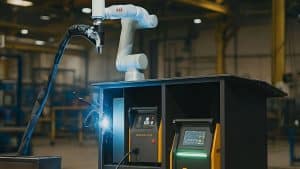


When a robotic machine can operate safely together with human personnel, we call them collaborative robots or cobots. Now, a cobot made for modern industrial production is referred to as a manufacturing cobot.
Industry adoption of manufacturing cobots has expanded in the past decade, and for some good reasons. This technology improves staff productivity and output quality while promoting a safe and conducive production environment.
In this article, we highlight the essential safety features of a manufacturing cobot as well as their potential in boosting a firm’s production capabilities.
Enhancing Welding Safety with Cobots
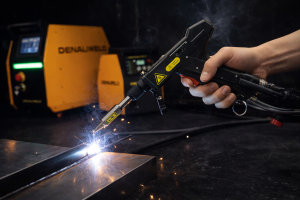
Welding is a hazardous task that exposes the worker to the risks of burns, toxic gas inhalation, electric shock, physical injuries, and muscle strain. Even the noise, bright lights, and sparks produced during welding can take a toll on the operator’s health in the long run.
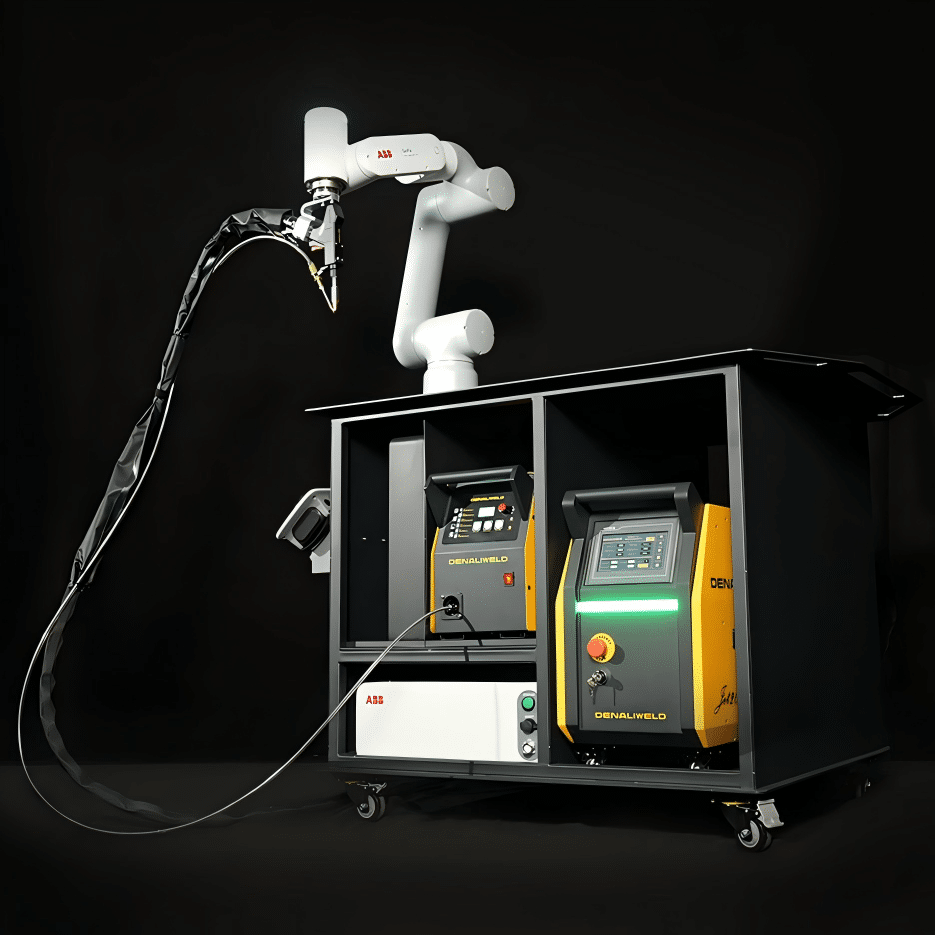
Now, a manufacturing cobot can take on repetitive and hazardous welding tasks without completely replacing the production workers. The cobot performs the menial tasks while the human operator focuses on oversight and quality assurance.
Cobot welders also come with safety features that automatically terminate or slow down the device when a person or obstacle is in close proximity. Most units have force-torque sensors at the cobot’s joints or hands that monitor the magnitude of the cobot’s force and torque. If the measured force surpasses a safe and predefined threshold, the system assumes a possible collision. Hence, the cobot’s controller immediately stops or slows movement to prevent harm.
It is also common for cobots to have emergency stop buttons. These are physical switches near a cobot that instantly cut power to the cobot’s actuators and halt its operation. The overriding mechanism of these buttons is hardwired to the cobot. This means that it is independent from the cobot’s software or network connections, which guarantee instant and reliable termination of the cobot’s operation in case of danger or malfunction.
Boosting Productivity and Welding Quality
When we say “robots”, we think of speed and capabilities that exceed humans’ limitations. This also applies to cobot welders, as they can weld with absolute precision at a rate that is two to six times faster than a skilled welder.
You can program cobots to follow specific weld paths and meet project specifications. Then, the software will automatically control the movement, speed, angle, and heat input of the cobot welder to match the specified requirements. This results in consistent welds with little variation and defects in the final product.
Most cobots are also designed to store and recall optimal welding programs for different workpieces or components. With a simple tweak in the settings, the same cobot can switch between tasks without compromising quality. Hence, the manufacturer can keep excellent and consistent joint quality even when producing a wide range of product types.
And since the cobot’s welds are consistent, there are fewer imperfections like incomplete joints, spatter, or burn-through. This means less scrap metal and fewer repairs, which saves both time and money. There is also less need for rework or post-weld polishing since the cobot follows a strict programmed welding procedure that minimizes errors.
Integrating Laser Welders with Cobots for Advanced Manufacturing
Cobots equipped with laser welders are a reliable and advanced solution for industries that demand pinpoint precision, high-throughput production, and flawless joint integrity. These industries include the automotive, aerospace, electronics, medical, and metal fabrication sectors.
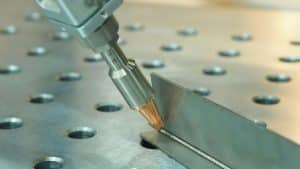
A laser-based cobot welder uses a high-energy beam of light to join materials. The laser’s heat is concentrated in a specific spot, which ensures a narrow heat-affected zone (HAZ) that results in clean welds that preserve the base material’s metallurgical properties. A laser beam can penetrate and fuse metals four to ten times faster than the old-school welding methods (e.g., MIG and TIG welding).
Laser cobot welders are a powerful tool in projects that require the production of complex geometries, penetration of thin and delicate metals, or a short turnaround time. For instance, automotive manufacturers may use cobot-guided laser welding to assemble lightweight vehicle components made from high-strength steel or aluminum alloys. The precision and flexibility of laser welding are ideal for joining intricate body-in-white structures, such as tailored blank door frames or battery housings for electric vehicles.
In the aerospace sector, a laser-based cobot welder can fabricate and fuse thin-walled titanium and aluminum assemblies found in aircraft fuselages and engine components. When making fuel tanks or turbine blade casings, the cobot’s consistent accuracy ensures that each laser weld achieves full penetration without warping sensitive workpieces.
In the production of electronic components, laser-guided cobot welders can produce robust and precise connection welds for battery tabs, circuit boards, and electronic sensor assemblies. This accuracy is vital to maintain reliable electrical performance and prevent thermal runaway in high-density battery packs.
Choosing the Right Manufacturing Cobot for Your Welding Shop
When you select a cobot for welding, you must consider various factors that affect your firm’s circumstances.
Facility size: A compact production floor space can support small-footprint cobots only that are easy to relocate and integrate into crowded work cells. Meanwhile, larger facilities can accommodate high-payload cobots with longer reach, or even multiple cobots working in tandem.
Welding Projects: The welding tasks your firm performs will definitely influence your cobot choice. For example, if your tasks require welding of thin-gauge aluminum for automotive body panels or intricate titanium components for aerospace, select a cobot compatible with precision welding processes such as TIG or laser welding.
Staff Competency: Your workforce’s experience with robotics and welding automation will affect the cobot implementation’s learning curve and success. For companies that are new to automation, they must select cobots that come with user-friendly interfaces, intuitive programming (such as teach pendants or drag-and-drop software), and strong vendor support are essential.
Adopt a Manufacturing Cobot and Promote Welding Workplace Safety and Better Productivity
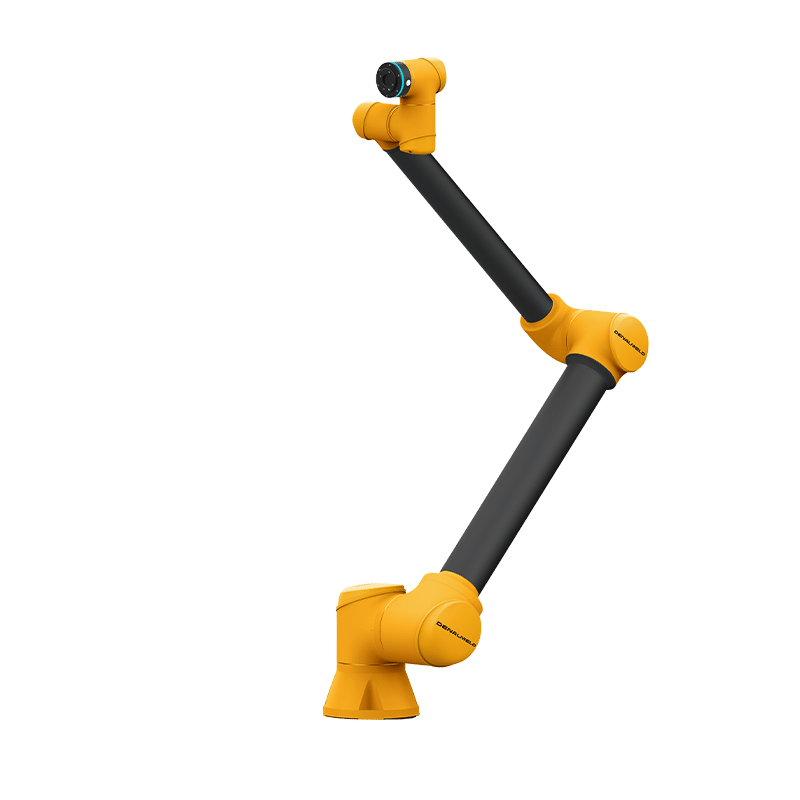
When you integrate manufacturing cobots into your welding workflows, you enhance both your workplace’s safety and productivity. You keep your team away from hazardous conditions and strenuous repetitive tasks and let them focus on quality and oversight.
The precision and consistency of cobot-assisted welding deliver high-quality results that minimize waste, downtime, and post-welding work. Your firm can maximize its ROI and produce higher-quality welds that can stand the test of time.
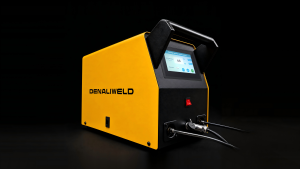
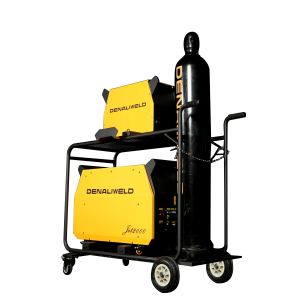
For top-quality laser cobot welding solutions, go to Denaliweld and check out our wide selection of laser welding machines. We develop safe, reliable, and easy-to-use cobots that help industries maximize productivity, minimize waste, and scale production in no time. Our brand ensures that every cobot can work safely along with human staff with relative ease and convenience.