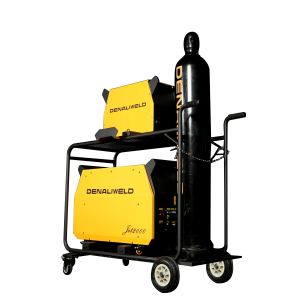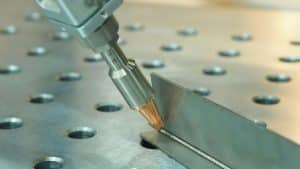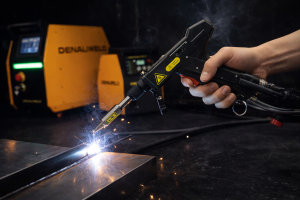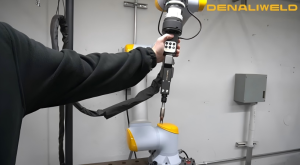


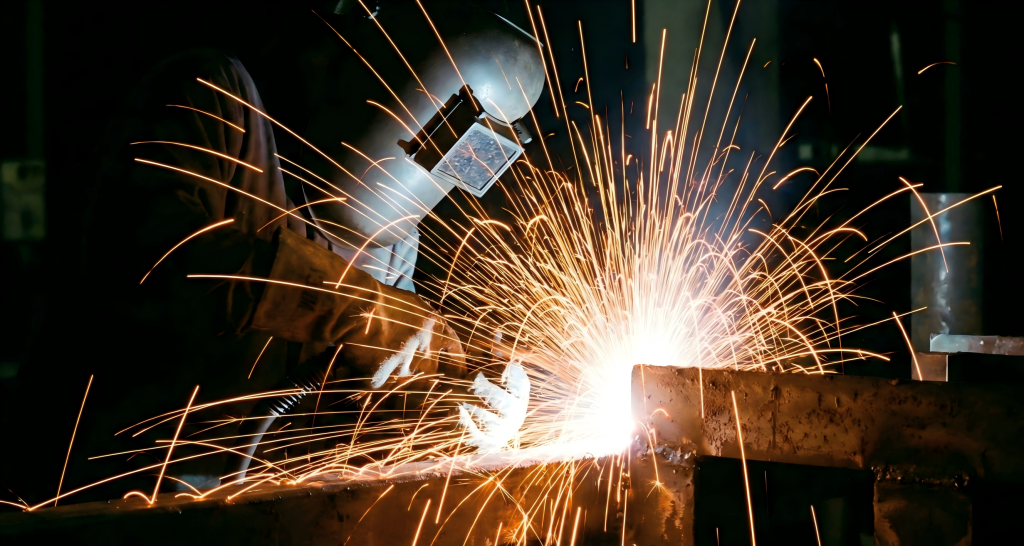
Handheld laser welding has drastically increased welding speed and precision in the metal fabrication industry. That is why more small metal fabrication shops are using handheld laser welders rather than traditional MIG and TIG devices. They are even using it on thin metals like aluminum and stainless steel.
However, a beginner with a handheld laser welder will often burn through thin metal quickly because their technique is off. Since a laser delivers a high-density beam of energy, the thin metal doesn’t have much material to absorb it. Unless the welder knows how to set the right parameters on the device, the excessive heat will melt a hole through the base metal.
The Common Causes of Burn-Through
Every metal fabrication shop wants its beginners to avoid burn-through laser welding. First, they need to understand that a handheld laser welder works by directing a high-intensity light beam onto a single tiny spot on the metal. If they can grasp that concept, then teaching them the rest will be much easier.
The next thing they need to understand is how metal responds when exposed to excessive heat. When welding metal over 0.25 inches thick, the surrounding metal acts as a heat sink, removing heat from the weld pool. On the other hand, welding thinner metal under 0.25 inches thick will cause the heat to burn through quickly rather than act as a heat sink.
With this in mind, here are the common causes of burn-through in thin metal welding:
Too Much Power
Excessive heat applied to metal is the number one cause of burn-through. Beginners don’t understand the proper power settings for each metal thickness.
Stagnant Heat
Loitering does not work well in thin metal welding. Welders must continue moving the device without remaining in one spot for too long. If a welder maintains stagnant heat in one spot for even a millisecond too long, it could cause the material to burn through.
Gaps Between Parts
Heat cannot transfer through gaps between metal parts. Attempting to weld metal under these conditions will cause the edges to melt away from one another rather than join, creating a phenomenon known as the “keyhole effect.”
Thin Metal Base
It helps to know when a metal material is too thin for a particular welding project. Beginners will mistakenly choose a material with an extra-thin base that is too thin.
Fit-up and Backing Tricks That Help
Poor fit-up, which his what causes gaps between parts, is a critical burn-through issue you need to address before messing with the settings on your handheld laser welder. Fit-up is critical for correctly aligning and positioning the metal parts for welding.
The Zero-Gap Rule
Experienced MIG welders will know that leaving a small gap can sometimes be helpful, but not when it comes to laser welding. A handheld laser welder will leave such a small spot at the focal point that it will pass right through the gap without even touching the metal edges.
The zero-gap rule is a thin-metal welding technique in which you don’t leave any gap between the two metals. Instead, you have them make contact with each other, leaving a 0mm gap between them. Clamp them down tightly to secure them and ensure the contact remains in place.
The Copper Backing Trick
The copper backing trick is a welding technique used to fill gaps without warping or burning through the thin sheet metal. What you do is take a piece of copper and clamp it against the backside of a weld joint. The copper will serve as a heat sink, extracting excessive heat from the thin sheet metal to prevent burn-throughs during laser welding.
Laser Welding Tips
Getting the fit-up right is the first step to avoiding burn-through in thin metal. The next step is to perfect the welding technique, which involves both the settings of the handheld laser welder and its use.
Below are the top laser welding tips for beginners engaging in thin metal welding:
Control the Power Level
Adjust the power settings on the handheld laser welder to a lower level, depending on the material thickness and gauge. In most cases, the power output should be anywhere between 500W and 1,500W to avoid distortions in thin metal welding.
For instance, 500W to 1,000W is good for metal thickness under 1mm. If you have a thicker metal between 1 and 3mm, it is better to go with a power level of between 1,000W and 1,500W.
For more detailed parameter settings for the Denaliweld laser welding machine, please refer to:Denaliweld Welding Parameter Setting
Short Passes and Stitching
Short passes are when you use a series of short weld beads rather than a long continuous bead to weld a lengthy seam. You would weld a few inches and then go back and weld the previous few inches. A long, continuous bead would likely cause burn-through or warping, which is why short passes are better.
An alternative is stitching, where you weld an inch, skip an inch, and weld the next inch. Then, you would come back and fill the gaps after the metal cools.
Steady Motion
A handheld laser welder works best on thin metal if you maintain a steady motion and speed without remaining in one spot for too long. The faster you move, the less heat will accumulate in any one spot, reducing the risk of a burn-through.
Pauses
Thin metal heats instantly. If you hold down the welder’s trigger for the entire seam, it can cause problems with the material. Pausing is a welding technique in which you take short “micro-cooling” breaks between weld passes.
For instance, you would hold the trigger down for a few seconds, release the trigger for one second, and then repeat. The brief pause between welds lets the base metal cool a bit before you add more heat. That helps prevent burn-through.
FAQs for Thin Sheet Welding
Why is a handheld laser welder better for thin metal welding?
A handheld laser welder can be set to a lower heat input to minimize warping and distortion. A skilled user can also administer narrow, precise welds in thin metals about four times faster than traditional MIG and TIG methods.
What is the best way to prevent warping in thin metal welding?
Use low power between 500W and 1,500W, and fast welding speeds of 20 to 60 inches per minute for thin metals. It all depends on the specific thickness of the metals.
What is the best welding technique in thin metal welding?
Beginners should start with the short passes and stitching technique. It will help train beginners out of the habit of continuously welding a long seam without leaving gaps. Once they see that it avoids warping, they will understand that the gaps will be filled after the welds cool.