

In 2024, the market size for collaborative robots or cobots is around USD850 million, and it is expected to grow by at least 22.8% over the next two decades. This trend is so apparent as manufacturers across industries are rapidly gearing towards cobot automation. From logistics and production to welding and packaging, cobots are starting to become a significant component of the production lines.
In this article, you will discover the wonders of cobot automation solutions, particularly their potential in propelling a firm’s productivity and cost-efficiency.
The Almighty ROI and Financial Benefits of Cobot Automation
In cobot automation, an automated robotic machine is programmed to perform tasks alongside human workers. They are built with lighter weights, force or torque sensors, safety buttons, and rounded edges to minimize workplace injuries and accidents.
In most industries, cobots perform the repetitive and manual tasks that require consistency and speed, while the human operator performs the thought-intensive tasks, such as planning or designing. And since cobots are no less than robotic machines, they have a 24/7 uptime that enables them to work continuously without breaks, producing consistent output quality at the shortest possible time.
Hence, cobot automation can significantly reduce a firm’s production costs. As cobots perform with better speed (at least around 30% faster than human workers), they can reduce the firm’s turnaround times, which drives down operating costs and results in better and faster ROI. Estimates indicate that ROI from cobots will only take around 12 to 18 months.
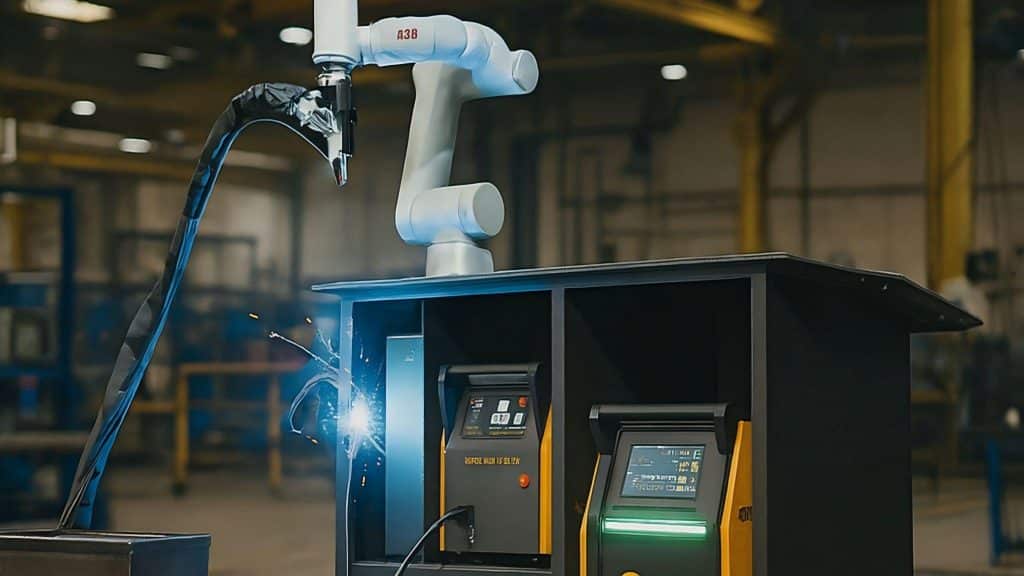
Consider a cobot welding machine. It can weld various types of metals with clear-cut precision and minimal thermal distortion, even at larger volumes (say, at least 20 to 50 workpieces). As it works alongside a skilled welder, they can fuse joints faster, which helps the firm deliver the output to the client sooner. The significant cut in the production time means lower operating costs and better returns.
Furthermore, cobots are designed to be easily programmable. So, it is fast and inexpensive to integrate them into the production line. And as some cobots come with intuitive interfaces and controls, workers can be easily trained to operate or work alongside manufacturing cobots.
Productivity Gains and Quality Improvements
Cobot’s productivity impact is a primary driver for its upward trend in the past five years. For instance, an industrial cobot welding machine can increase welding output because it can operate without breaks or fatigue. Unlike human welders, cobots can produce top-quality welds at a steady pace, which can double or even triple overall production rates.
Cobot welders can also enhance the resulting weld. Cobots follow each programmed weld path with identical torch angles, travel speeds, and heat settings every cycle. This strict repeatability produces uniform beads and penetration on every joint. Fewer welding defects appear, so scrap metal piles shrink and the number of rejected assemblies drops. With less rework needed, companies waste less filler wire, shielding gas, and labor, which also contributes to cost savings.
Cobots are also helpful in environments where production runs are small and change frequently. They can be reprogrammed quickly for new jobs, so it is easy to switch between different products without long delays. This flexibility means shops can take on a wider variety of work with less downtime between orders.
Addressing Labor Shortages and Workforce Safety
Cobots can also help fill the gap when skilled welders for a particular application are difficult to find.
When you adopt a cobot welder, you will only need one operator who can oversee several cobots that can multiply output without hiring more welders. With this setup, your experienced staff may focus on difficult welds, setup, and inspection, instead of repetitive and menial fusion tasks.
Hence, cobots are an effective response to labor shortages in welding, especially when the pool of qualified welders shrinks, which is usually associated with rising wages. When you integrate cobots, you can stabilize your production without being constrained by scarce human resources. You will not leave your welding bays idle or turn down contracts due to limited staff. Instead, your company can maintain your production capabilities or even expand your volume output.
Moreover, welding cobots can take over tasks that are hazardous to staff. They can produce welds in tight enclosures, overhead, or near hot surfaces that often cause injuries or accidents. Now, as fewer people work in high-risk spots, the occurrence of burns, eye injuries, and muscle strains also decreases.
Practical Considerations and Integration Flexibility
The best part of adopting a cobot welding machine is the ease and simplicity of its integration into your existing production system.
For instance, you can program the cobot‘s functions and algorithms in only a few hours. Some welding cobots even have their programming pre-made by the manufacturer. This means that teams can set up and start running new welding applications with the help of cobots in a single day. The process is straightforward with no complex coding. Furthermore, the cobots usually have simple controls that guide the arm through each movement.
Moreover, cobots fit into tight spaces. In fact, their small footprints can slide between crowded workstations. They also have wheels or light frames that make them easy to move. You can shift one from a truck frame weld to a small bracket line.
Next Step: Supercharge Production With a Cutting-Edge Cobot Automation Technology
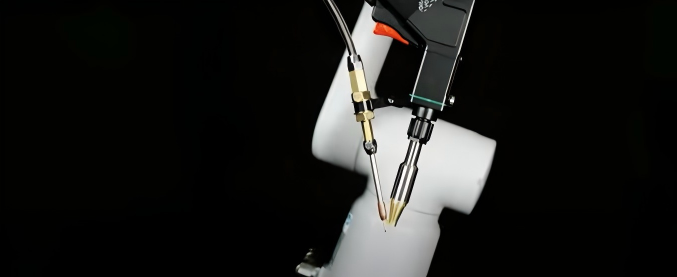
Cobot automation in welding can make a huge difference in your production quality and efficiency. Your firm’s output rises as cobots maintain and improve production pace across shifts, which keeps your weld lines moving even when skilled labor is scarce or hard to find. Furthermore, as cobots are programmable to perform repetitive, menial tasks automatically, the uniformity of the resulting weld beam improves, which reduces the frequency of rejected parts and brings down costs tied to scrap and rework.
Denaliweld is a world-class manufacturer of first-rate, SGS and CE-certified welding cobot solutions. Capable of delivering automated laser welding, the Denaliweld cobot series offers top-notch precision, efficiency, and speed across multiple industry applications, such as in automotive, aerospace, electronics, and medical equipment production.