


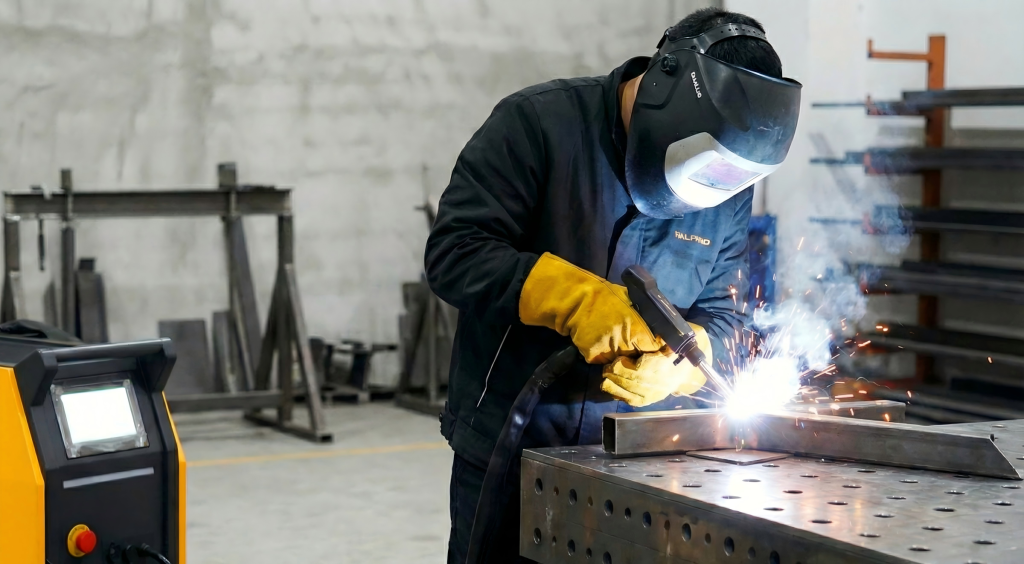
Many people focus only on the handheld laser welding device itself when purchasing one for their metal fabrication shops. What they don’t often think about are all the other consumable parts associated with it that wear out quickly.
If you have experience using industrial tools like welders, you know how dependent they are on various consumable parts to remain functional. For instance, MIG welders require frequent nozzle and contact tip changes. Laser welding consumables are no exception. You need them to ensure precise, targeted welds without any issues.
What Counts as a Consumable in Laser Welding
Laser welding does not involve physical contact with the metal, unlike MIG and TIG welding, which require a filler material or electrode to touch the metal. However, the environmental factors, such as humidity, temperature, atmospheric pressure, and airborne contaminants, can impact laser welding in the following ways:
- Change the focus of the laser beam
- Cause instability in the weld pool
- Distort the material
- Impact penetration depth
Laser welding consumables are usually the parts found around the end of the torch that are exposed to excessive heat, fumes, or spatter. They help ensure the laser beam remains precise and focused, without any fluctuations or distortions. Unfortunately, these consumable parts degrade quickly, so they need frequent replacement to maintain proper laser welds.
The best examples of consumable laser welder parts include the following:
Nozzles
Laser welder nozzles feature copper tips that protect the laser beam and direct the shielding gas to prevent damage and spatter.
Protective Lenses & Windows
The protective lens is a cover slide or window that protects the internal optics with a glass shield against fumes and spatter.
Filler Wire
Filler wires are the materials used to fill in joints in certain circumstances.
Shielding Gases
Laser welders use shielding gases, such as helium or argon, to prevent the weld pool from being contaminated by environmental hazards that could cause defects and distortion.
Protective Lenses & Windows: What They Do
The protective lens is one of the most important consumables for laser welding. It is a small, clear window usually made of fused silica or quartz, but coated with an anti-reflective solution. It is the shield or barrier that sits between the outside environment and the fragile optical mirrors within the laser welder.
Each time you pull the trigger of the handheld laser welder, the high-power laser beam passes through the protective lens with virtually no resistance. Meanwhile, the lens blocks all outside dust, smoke, spatter, and fumes from entering the welder. While this might seem effective, the lenses can quickly become dirty if you use the welder regularly.
The first signs of a dirty lens are hot spots or black-and-brown spot marks on the lens glass. These spots can absorb heat from the laser and, if debris continues to build up on the lens, eventually cause the lens to crack or shatter. Once that happens, the excessive heat energy will burn the internal optical focusing lens, which can cost many hundreds of dollars to repair or replace.
Nozzles and Tips: When to Replace
Every handheld laser welder has a copper tip (or nozzle) at the end of the gun. It is what guides the shielding gas directly over the weld pool. The nozzles are made of copper because it has high thermal conductivity, enabling them to withstand high temperatures. They also protect the laser lens from spatter.
Laser welder nozzles wear out quickly. If you leave a degraded copper tip on your welder, it will be reflected in the quality of your welds. Here are the signs to indicate it is time to replace your nozzles with new ones:
Deformation
The nozzle opening or tip should look like a perfect symmetrical circle. If it becomes degraded, it will look distorted, deformed, or misshapen. Periodically check the nozzle for signs of this. If you see these signs, you must replace the nozzle immediately. Don’t try to weld when it is like this, not even a little bit.
Spatter Accumulation
You can always expect some spatter, but not too much. If you see excessive spatter around the inside or outside of the nozzle, it will impede the flow of shielding gas. The result will be porous welds and other visible signs of low quality.
What to Include in Your Consumable Spare Parts Kit
Building a spare parts kit is the best way to prepare for the inevitable times when you will need to replace your laser welding consumables. Think of it as regular maintenance you need to perform on your handheld laser welder to keep it functioning at its best.
You’ve already learned about some of the most common consumables. Here is a more comprehensive list of consumable spare parts that you need to stock in a kit or container:
- Wire feed tips (at least 10 for each wire diameter you run)
- Wire liners
- Shielding gas (e.g., nitrogen, argon)
- Diffuser screens
- Protective lens (at least five)
- Nozzles (at least two flat and two fillet-shaped nozzles)
- O-Rings
Keep the kit or container in a clean, dust-free box near the welder.
FAQs
How long does a protective lens usually last?
The longevity depends on the welding environment and the frequency of use of the handheld laser welder. It also depends on the welder’s skill level.
Generally, an operator will get about 40 to 80 hours of use from the protective lens under normal environmental conditions. Dirtier environments and unskilled welders could reduce this lifespan.
Where should I buy my laser welding consumables?
The best place to buy your laser welding consumables is from the original equipment manufacturer of your handheld laser welding device. Either that, or you can seek out a certified manufacturer partner that specializes in making the consumables for your welder. Try to avoid unfamiliar online marketplaces or unknown brands, as they are likely to sell you poor-quality consumables.
How should I store my laser welding consumables?
Keep your consumable spare parts in an airtight container to keep out dust and humidity. It would also help to include a few silica gel packets in the container to reduce moisture further. Don’t just throw all the parts together in the same space within the container. Try to keep all the spare parts in separate compartments if you put them in the same container or box.