

Cobot welding integration can improve consistency and capacity, but only when it is planned around the line already in place. For many shops, the concern is not whether automation works. It is whether the rollout can happen without slowing throughput, overwhelming operators, or creating a new bottleneck.
The right setup may be a standard cobot cell, a cobot laser welding line, or a semi-automated process built around specific parts. The goal is the same: protect output while giving the team a practical path to better weld repeatability.
Why Cobot Welding Integration Starts with Workflow, Not Equipment
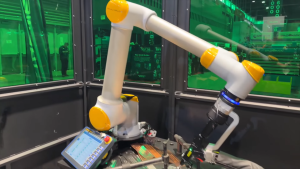
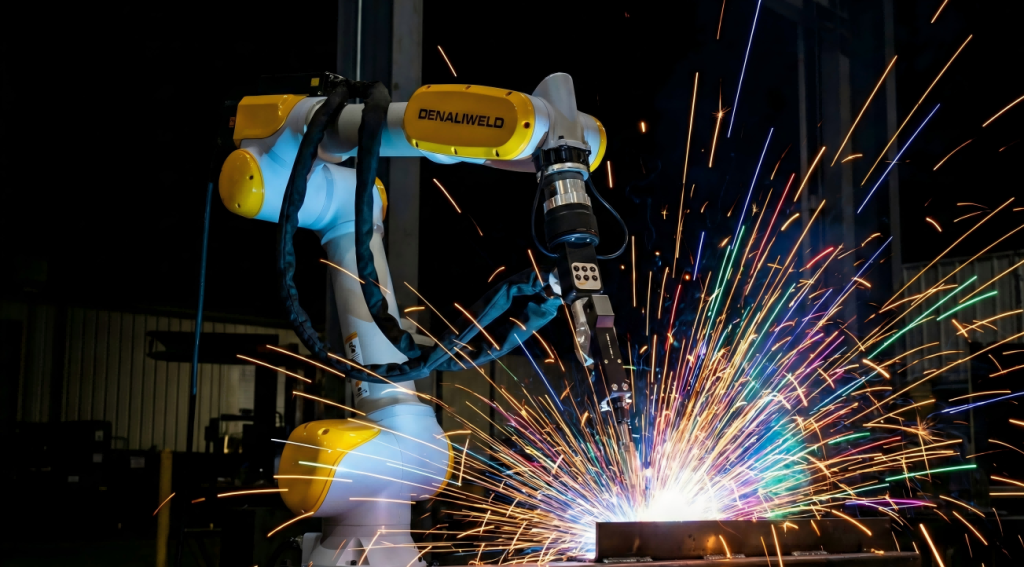
A cobot, or collaborative robot, is generally defined as a robot designed to work in shared spaces with people under appropriate conditions. In welding, that collaborative design is only one part of the equation. The system still has to fit the line, the weld process, and the way operators move parts through production.
Before choosing equipment, manufacturers should review bottlenecks, part mix, takt time, weld repeatability, and changeover patterns. A fast robot does not protect throughput if parts arrive late, fixtures vary, or finished assemblies wait for the next station.
This is why planning should focus on upstream and downstream flow. Floor space, operator availability, joint access, fixture design, and inspection steps all affect the result. A successful project begins by asking where automation removes friction, not simply where a cobot can be installed. That workflow-first mindset is especially important because even collaborative systems still need process-specific planning and risk controls in welding environments.
How to Assess an Existing Line Before Adding a Cobot or Laser Welding Cell
A useful line assessment starts with the parts. Review geometry, material type, weld length, weld frequency, current defect rates, rework volume, and manual labor demand. Jobs with stable fit-up and repeatable weld paths are usually better first candidates than highly variable assemblies.
Next, look at the process window. The team should confirm whether the work fits a traditional arc-based cobot cell, a cobot laser welding line, or another semi-automated configuration. Joint accessibility, fixture repeatability, part presentation, and allowable cycle time matter as much as the welding source.
Infrastructure also needs attention. Check available power, ventilation, shielding, fume control, safety zones, and material handling space before the layout is finalized. Teams comparing cobot-ready system paths can review Denaliweld’s Cobot Series as part of that evaluation.
For operations leaders, this protects schedules. For shop owners, it helps avoid paying for capability the line is not ready to use.
A Step-by-Step Plan for Seamless Implementation
The safest rollout begins with one narrow application. Choose a repetitive weld, stable part presentation, and a measurable target for cycle time, quality, and uptime. Avoid starting with the most complex job. Early wins are easier to scale than overloaded pilots.
Offline planning comes next. Map the cell layout, operator position, loading process, finished-part exit, and inspection point. For any cobot integration, handoff timing is critical. If the next station waits on the cell, the system can create the same throughput problem it was meant to solve.
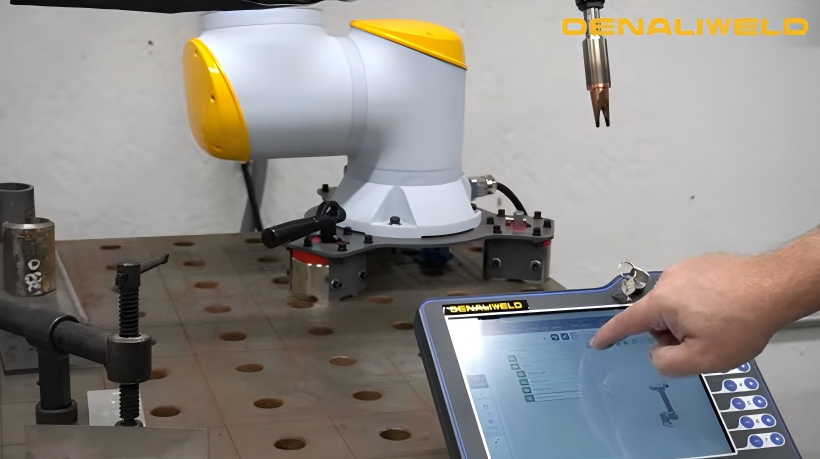
During programming and testing, run sample batches before full production use. Compare weld quality, cycle time, and rework against the current baseline. Adjust fixtures, programs, and scheduling before expanding the application.
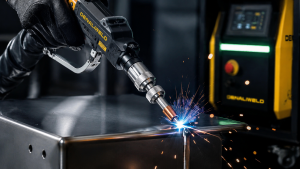
A CNC laser welder may fit when precision, repeatability, or heat control requirements point toward a laser-driven process. Even then, implementation should remain phased. In practice, smooth rollouts often come from controlled production windows, not full-line disruption.
Start with the Right Pilot Application
Select a job with predictable fit-up, steady volume, and clear quality requirements. This gives the team a realistic proving ground before broader deployment.
Design Around Throughput Protection
Map how parts enter and leave the cell. Include operator interaction, inspection, and part staging so the process does not depend on guesswork.
Validate Before Full Deployment
Use sample runs to identify fixture issues, timing gaps, and training needs. Staged implementation reduces disruption risk and gives operators time to build confidence.
Safety, Training, and Team Adoption in a Live Production Environment
Collaborative systems still require application-specific risk assessment. Welding adds heat, arc exposure, fumes, tooling motion, and part-handling concerns. Laser processes add another layer of shielding and controlled-access planning.
Training should cover more than basic operation. Operators need to understand loading, unloading, normal intervention points, fault recovery, quality checks, and when to stop the process. Programmers and maintenance staff also need clear ownership.
Adoption improves when people know how the system supports their work. A cobot should feel like a controlled production tool with known responsibilities. Denaliweld’s guide to cobot welding training can help teams think through the skills operators actually need.
Choosing Between a Standard Cobot Cell and a Cobot Laser Welding Line
The best system is the one that fits the production reality. A standard cobot cell may be the better value when welds are repetitive, part presentation is stable, and the team wants a manageable starting point. A laser-driven setup may be worth evaluating when precision, heat input, or cycle consistency is the larger constraint.
Denaliweld’s Cobot Series gives manufacturers a practical starting point for comparing cobot-ready options without jumping straight to the most advanced system on paper.
Decision factor | Standard cobot cell | Cobot laser welding path |
Best use case | Repeatable welds with manageable variation | Precision welds with tighter heat control needs |
Main value | Consistency, labor support, scalable automation | Speed, precision, and controlled heat input |
Planning focus | Fixtures, access, programming, handoff timing | Safety zones, shielding, process control |
Possible tradeoff | May not suit every precision requirement | Usually needs more specialized planning |
The right choice depends on material, weld geometry, throughput targets, and budget.
FAQs
How long does integration usually take in an existing shop?
It depends on part complexity, fixtures, programming, and safety needs. A focused pilot is usually faster than a full-line conversion.
Will adding a cobot slow down my current production line at first?
It can if the rollout is rushed. Testing before full production helps protect throughput.
What types of jobs are best for a laser welding line?
Stable, repeatable parts with precision requirements are often stronger candidates.
Do operators need extensive retraining?
They need focused training on operation, intervention, troubleshooting, and quality checks.
When does laser welding make more sense than a standard cobot welding cell?
It may fit when heat control, precision, or repeatability requirements justify a specialized process.
Conclusion
A smooth automation rollout depends on planning, pilot selection, safety, and training more than equipment alone. Throughput is easier to protect when the first application is narrow, validated, and matched to workflow.
For teams evaluating a practical path forward, Denaliweld can help connect production goals with system options that fit the line. Explore Denaliweld product options to start building an integration plan around your parts, people, and throughput targets.