


Introduction
The cobot welding vs robotic welding question usually comes down to what you build and how often it changes. Run the same part all day and one answer makes sense. Switch to a different job every week and the answer flips. A spec sheet won’t tell you which way to go.
Both are automated welding systems built for opposite situations. Cobots handle mixed work at lower volume. They move between jobs without much fuss. A robotic cell is meant for long repeatable runs where the part rarely changes. Buy the one that doesn’t fit your production and you pay for it. The equipment sits idle. Your money is locked into the wrong setup. The line can’t grow when orders climb.
The rest of this article puts the two side by side and shows how to pick the right one for your shop. To see where automated laser welding fits your part mix, start with Denaliweld.
Cobot Welding vs Robotic Welding: Key Differences
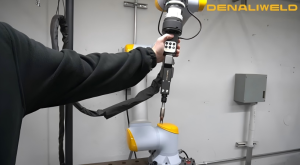
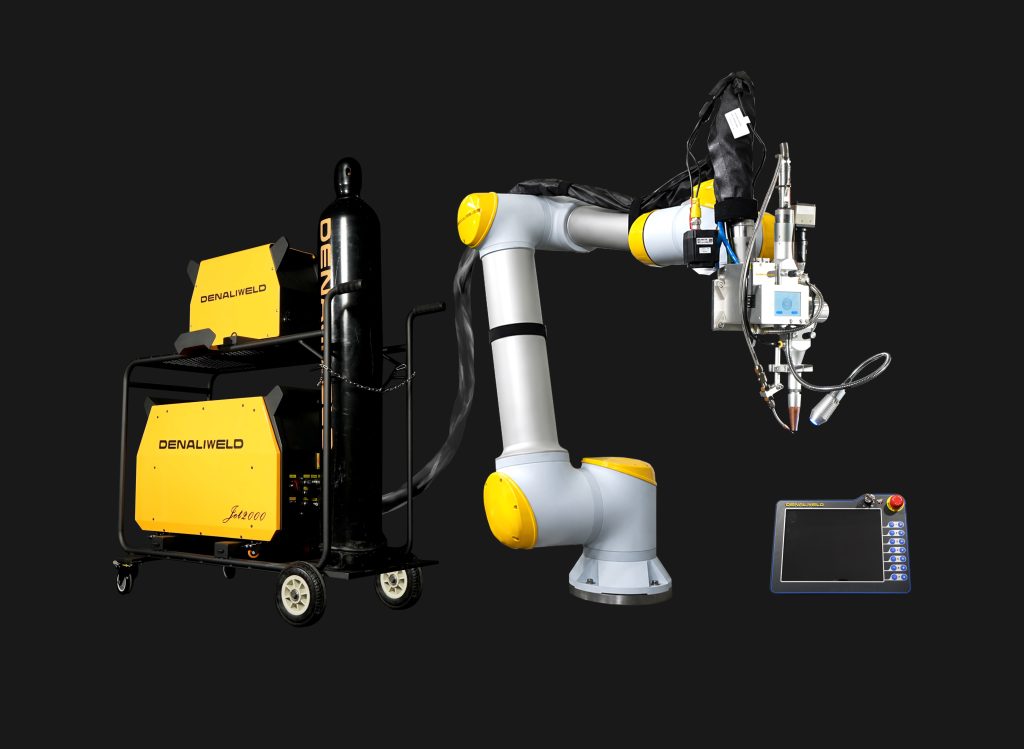
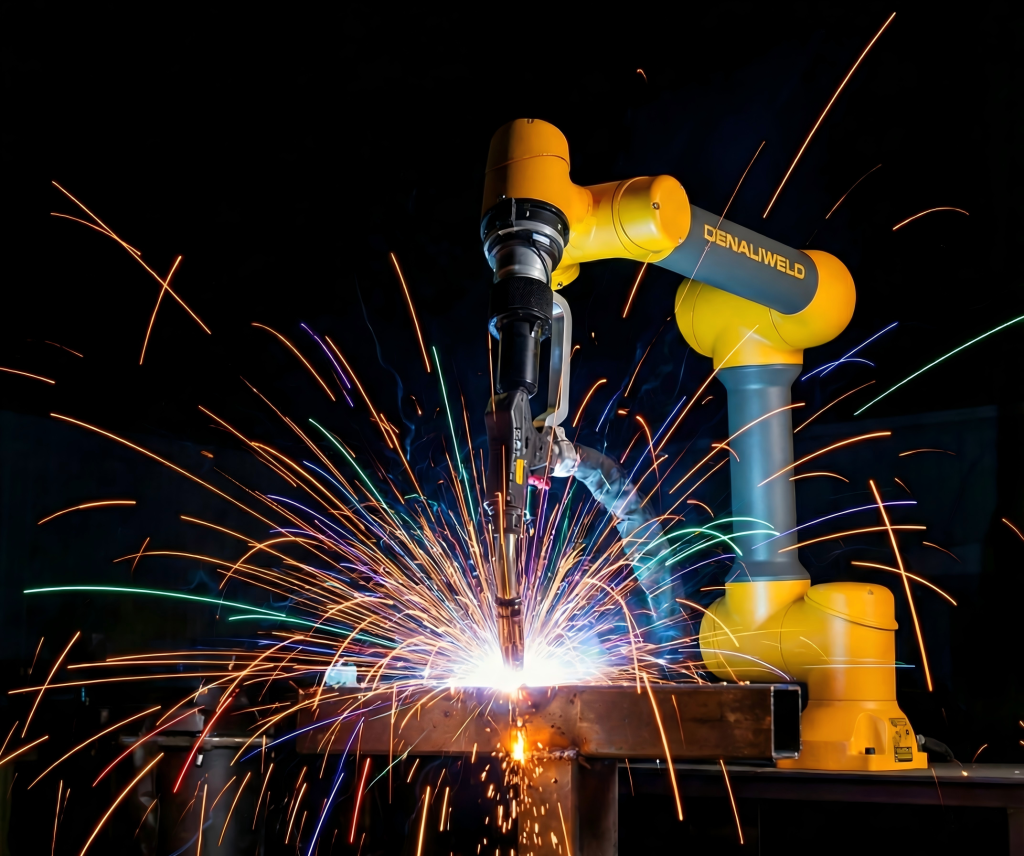
A cobot is a lightweight robotic arm that welds next to people instead of behind a fence. Safeguards let it share the workspace. An operator can teach it a new path by hand or through a simple menu. When the job changes, you move it and reprogram it in a few hours. That low barrier is the main draw for a shop new to automation.
A traditional robotic cell works the other way. It lives inside a guarded enclosure. It follows paths written offline. It is set up around one part with fixed fixturing. Feed it a steady repetitive job, and it returns cycle counts a cobot can’t touch.
The clearest split is flexibility. A cobot redeploys easily across varied parts and short runs. A robotic cell hits its stride on the same part run thousands of times. That is where the fixturing and programming investment pays back.
The setup follows the same pattern. A cobot lowers the entry point for teams new to automation. A full cell usually needs deeper integration. It also needs guarding and a programming budget.
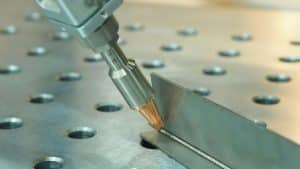
Floor space splits the same way. A cobot works in a compact footprint beside people. A robotic cell needs its own guarded zone. Robotic laser welding also adds the precision and speed that lifts output. See how robotic laser welding is transforming manufacturing efficiency for the production-line view.
Factor | Cobot Welding | Traditional Robotic Cell |
Best production fit | Mixed parts, smaller batches | High volume, repeatable parts |
Flexibility | Easy to move and reprogram | Fixed to one setup |
Programming | Hand-guiding, simple interface | Offline programming, integration support |
Floor space | Compact, works near operators | Dedicated guarded footprint |
Safety model | Collaborative with safeguards | Full guarding or enclosure |
Throughput ceiling | Moderate | High |
Upfront cost | Lower entry point | Higher integrated investment |
Cost, Setup, and ROI in Automated Welding Systems
Sticker price is the smallest part of the math. The platform itself is one line item. The full cost also includes:
- fixtures and integration
- software and programming
- operator training
- safety gear
- maintenance over the life of the machine
A cobot makes sense when you want automation you can redeploy. It fits shops that aren’t ready to wall off a dedicated cell. The cell earns its higher price once production is steady. It needs enough volume to stay busy.
This is where spec-sheet-only buying goes wrong. Shops compare robot reach or laser wattage. They sign off on the lowest number. Then they hit the gaps in production. The most common miss is the duty cycle. A machine rated for high power may not run a full shift without thermal throttling.
When it throttles, it stalls your line. Cooling matched to the wrong thickness or run time causes the same trouble. Skimp on fixturing, fume control, or operator training, and the bill comes due later.
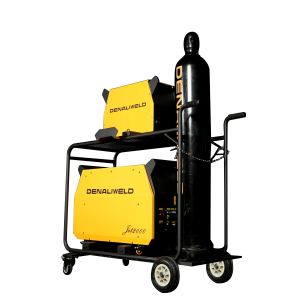
Buy from a source with no local parts, and a cheap machine turns expensive fast. Denaliweld machines are rated for 100% duty cycle. Each one passes a 4-hour non-stop weld test before it ships. A U.S. parts inventory sits behind them for fast service.
The hidden costs shift payback as much as the hardware does. Think about training time and changeovers. Think about how parts reach the arm and the floor space you give up. Downtime and room to scale matter too. The return shows up in less rework and steadier weld quality. It also shows up when skilled welders spend their hours on work that needs a human eye.
None of that supports inflated savings claims. The real number depends on your part mix and batch size. It depends on the weld requirements, labor, and integration quality. As the welding-research group BIL/IBS explains in its guide to choosing between manual, cobot, and robot welding, the right answer hinges on production context, investment level, and where the value gets created.
For shops fitting laser welders into a line, Denaliweld’s automated welding solutions cover both paths.
Choosing Between Cobot vs Industrial Robot Welding
Match the system to your work rather than to a competitor’s setup. A short framework keeps the decision grounded.
A cobot is the better bet when your work is varied. That means mixed parts and small batches and weld jobs that shift week to week. It also wins when floor space is tight or the team is new to automation. Lean toward a robotic cell when the same part runs in high volume. The fixturing has to stay put. The throughput has to matter enough to justify the integration.
Cobot strengths
- Fast to deploy
- Easy to reprogram
- Compact and works next to operators
- Lower entry cost
Cobot limits
- Moderate throughput ceiling
- Weaker on very high-volume single-part runs
Robotic cell strengths
- High speed and repeatability
- Strong for dedicated production
- High cycle counts
Robotic cell limits
- Higher upfront and integration cost
- Larger guarded footprint
- Slower to retool
Either one welds well when the process behind it is built, tested, and kept up. The worries that stall a purchase usually have plain answers.
- Will my team run it?Cobots use hand-guiding and presets. Trained operators get productive fast.
- Will it fit our floor? A cobot needs a compact collaborative footprint. A cell needs a planned guarded zone.
- Will it pay back? Only if it stays loaded. That is why volume and part mix come first.
- What happens when our part mix changes? A cobot redeploys. A fixed cell may need rework.
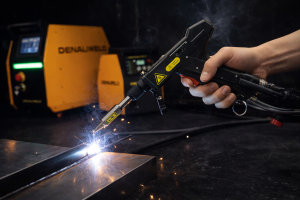
Plenty of manufacturers end up running both. They use cobots for flexible jobs and cells for dedicated high-volume work. Denaliweld supports that path. ROBOX™ lets operators switch between handheld and automated welding with one click. The cobot platform works across air- and water-cooled models.
Conclusion
So in the cobot welding vs robotic welding decision, cobots come out ahead on flexibility and an easy learning curve. Robotic cells win on raw speed and repeatable output. There is no single right answer for every shop. It comes down to your part mix and volume and budget. It also comes down to the space you have and how far you want to take automation.
Here is a simple way to start. Shops with varied work and little automation experience should look at cobot-style automation first. High-volume manufacturers should size up a robotic cell or a full line. Before you commit, look at your weld volume and part variability. Check your floor space and your ROI target too. Those numbers point to the answer.
Talk to Denaliweld about which system fits your part mix and duty-cycle needs. Request a quote or book a demo. You can also compare machines to plan your automation path.