

How manufacturers use cobot welding to stay flexible as production needs change starts with one practical idea: future-proof cobot welding is not only about buying a robot. It is about building a welding process that can adjust when orders, parts, labor, and quality demands shift.
For many shops, the risk is not automation itself. The bigger risk is waiting until welders are overloaded, rework rises, or a new contract requires more throughput than the current process can handle.
Cobot welding gives manufacturers a bridge between fully manual work and larger automated cells. It can help teams keep skilled welders focused on setup, inspection, and complex work while repeatable welds move into a more consistent process.
Why Welding Processes Need to Keep Up With Factory Transformation
Production rarely changes in a straight line. A shop may need to handle new part designs one month, shorter lead times the next, and higher volume after that. When welding relies only on manual capacity, each change can place more pressure on the same limited team.
That is why factory transformation should be viewed as a practical workflow upgrade, not a one-time equipment purchase. The goal is to make welding more repeatable, easier to control, and ready for the next production demand.
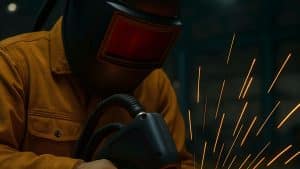
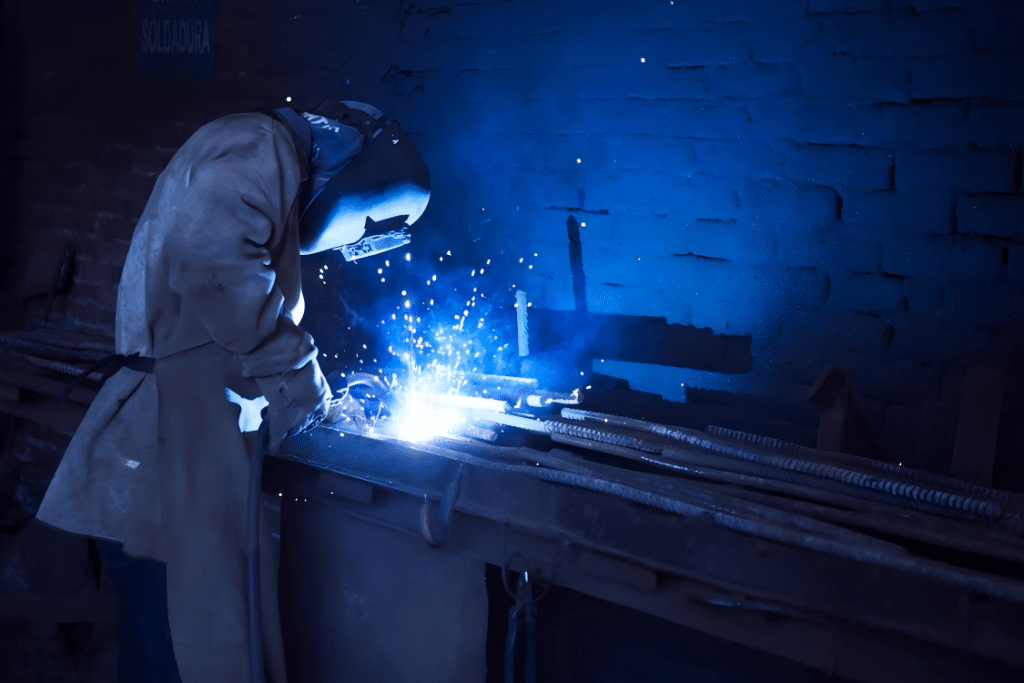
Manual welding still matters. Skilled welders bring judgment, setup knowledge, troubleshooting ability, and quality awareness. But repetitive seams, long shifts, and high-volume jobs can create fatigue and variation. A manufacturer may win new work and still struggle to deliver if every weld depends on scarce labor.
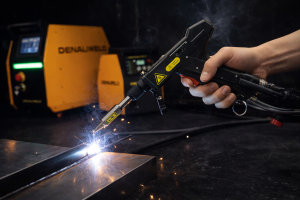
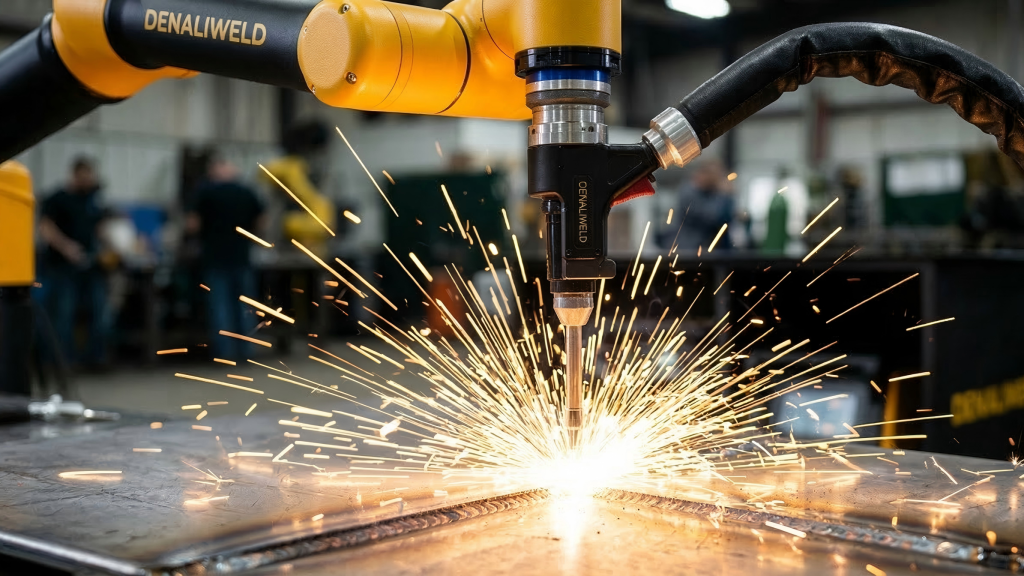
Denaliweld’s automated welding solutions support this shift by connecting laser welding with robotic or CNC systems, smart factory integration, process monitoring, and traceability. The broader automation field also recognizes cobots for improving flexibility, productivity, safety, and resilience in industrial work, as noted in this overview of collaborative robots.
Why Welding Processes Need to Keep Up With Factory Transformation
Production rarely changes in a straight line. A shop may need to handle new part designs one month, shorter lead times the next, and higher volume after that. When welding relies only on manual capacity, each change can place more pressure on the same limited team.
That is why factory transformation should be viewed as a practical workflow upgrade, not a one-time equipment purchase. The goal is to make welding more repeatable, easier to control, and ready for the next production demand.
Manual welding still matters. Skilled welders bring judgment, setup knowledge, troubleshooting ability, and quality awareness. But repetitive seams, long shifts, and high-volume jobs can create fatigue and variation. A manufacturer may win new work and still struggle to deliver if every weld depends on scarce labor.
Denaliweld’s automated welding solutions support this shift by connecting laser welding with robotic or CNC systems, smart factory integration, process monitoring, and traceability. The broader automation field also recognizes cobots for improving flexibility, productivity, safety, and resilience in industrial work, as noted in this overview of collaborative robots.
How future-proof cobot welding Keeps Production Flexible
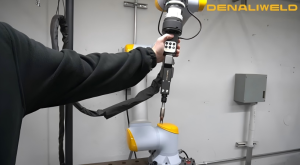
Flexibility is the main reason many factories look at cobots before committing to a larger automated line. A cobot can be reprogrammed for new jobs, adjusted for changing part families, and used for both smaller batches and higher-volume repeat work.
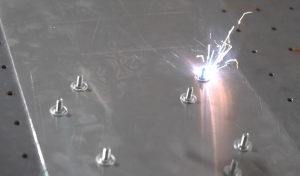
The value is not just speed. It is consistency. When a cobot follows the same weld path with the same programmed settings, teams can reduce variation caused by fatigue or shift changes. That can support cleaner planning, more predictable output, and fewer surprises during quality checks.
There are clear pros and cons.
Option | Best Fit | Strength | Watchout |
Manual welding | Complex or low-volume work | High operator judgment | Harder to scale consistently |
Cobot welding | Repeatable welds with changing demand | Flexible and repeatable | Needs planning, training, and fixturing |
Full automation | Stable high-volume production | High throughput | Larger investment and less flexibility |
Cobot welding can also help reduce pressure on senior welders. Instead of assigning every repetitive weld to the most experienced person, teams can use that expertise to validate settings, improve fixtures, and inspect critical work.
Denaliweld explains how cobot automation can support productivity, safety, cost control, and flexible integration in its article on cobot automation benefits. The strongest value often appears when cobots reduce rework, protect consistency, and help a shop take on more repeatable work without immediately expanding headcount.
Building a Cobot Automation Roadmap Before You Buy
A cobot automation roadmap helps manufacturers avoid buying equipment before they understand the welding task. It also helps prevent under-specifying a system that cannot support future applications.
Start with the current bottlenecks. Which welds repeat often? Which jobs create the most rework? Where do skilled welders lose time on tasks that are important but predictable?
Then review the practical details. Look at part fit-up, weld access, fixture quality, production volume, floor space, safety needs, and operator training. A cobot is easier to justify when the first application is realistic and measurable.
A simple planning flow can look like this:
Assess current welds → choose one repeatable pilot task → validate quality → train operators → document settings → scale to more applications.
This approach also creates backup options. If a part is not ready for cobot welding, the team can improve fixtures, standardize part preparation, or begin with a smaller pilot cell before scaling.
Manufacturers comparing system requirements can use Denaliweld’s guide on choosing the right cobot to think through payload, reach, safety, integration, and application fit before making a purchase decision.
What to Look for in Scalable Cobot Welding Systems
A robot arm alone does not create scalable cobot welding. Scalability depends on the full system: welding power, controls, programming, data capture, maintenance access, integration, and support.
Look for payload and reach that fit both current workpieces and likely future jobs. Also check whether operators can program the cobot without slowing production. A system that is powerful but difficult to use may create a new bottleneck.
The DenaliWeld COBOT system is designed to combine automation with user-friendly operation, flexible integration, modular maintenance, welding data acquisition, and optional seam tracking. The system also supports switching between manual and automated workflows, which can help teams adapt when production needs change.
Before scaling, ask these questions:
- Which parts repeat often enough to justify a cobot?
- What quality issues appear most often?
- Who will operate, maintain, and adjust the system?
- What welding data should be tracked?
- Which future applications could be added later?
For manufacturers evaluating model options, integration flexibility, and workflow adaptability, the DenaliWeld COBOT system is the natural place to review available features and next steps.
FAQ: Future-Proofing a Factory With Cobot Welding
What does future-proof cobot welding mean?
It means using cobot welding to make production more adaptable. The goal is to handle changing part types, order volumes, and labor conditions with less disruption.
When should a factory move from manual welding to cobot welding?
A factory should consider cobot welding when repeatable welds consume too much skilled labor, quality varies across shifts, or output needs to grow without a full production-line redesign.
Can cobot welding work for small-batch or high-mix production?
Yes, when the jobs are planned carefully. The best starting point is usually a repeatable weld family with consistent fit-up and clear quality requirements.
How does planning reduce investment risk?
Planning helps teams match the cobot to the application. It clarifies reach, payload, part access, fixturing, training, and the first pilot job.
What should manufacturers check before investing?
They should check part repeatability, weld access, floor space, safety requirements, operator readiness, service support, and future production goals.
How can Denaliweld support long-term flexibility?
Denaliweld can help manufacturers review cobot options, automation requirements, welding workflows, and system features that support future production growth.
Conclusion: Plan for Flexibility Before Production Demands Change
Future-ready welding starts before demand spikes or staffing gaps create urgency. Cobot welding gives manufacturers a practical way to improve repeatability, reduce pressure on skilled welders, and build a more flexible production path.
The best first step is to identify repeatable welding tasks, evaluate the process around them, and map a realistic automation plan.
To review your welding applications and explore a flexible cobot setup, contact Denaliweld for guidance on choosing a system that fits both current work and future production needs.