

Introduction: Why Cobot Welding Is Now Accessible to Smaller Shops and Contract Manufacturers
A few years ago, cobot welding for small manufacturers made no sense. The machines cost too much. They needed an engineer to run them. Only big plants could carry that. The picture has changed. Smaller shops and contract manufacturers now run cobots every day. They weld a dozen different jobs in tight bays with a crew of two or three. Maybe that sounds like your shop. If so, you have three real questions. What does it cost? How hard is it to teach? When does it pay for itself?
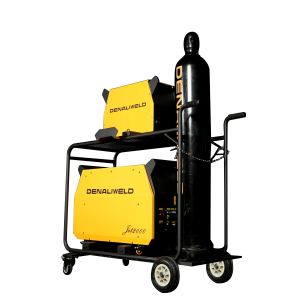
Today’s machines were built for that kind of shop. They set up fast. They move easily. They handle the mixed low-volume work most small shops live on. This guide covers why cobot welding for small manufacturers finally adds up. It shows how to read your own floor first. It breaks down the real cost. And it explains where Denaliweld fits if you want to ease into automation instead of betting the shop. Want the hardware side first? Start with the cobot welding systems.
Why Cobot Welding for Small Manufacturers Is More Practical Than It Used to Be
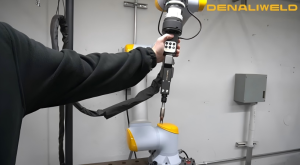
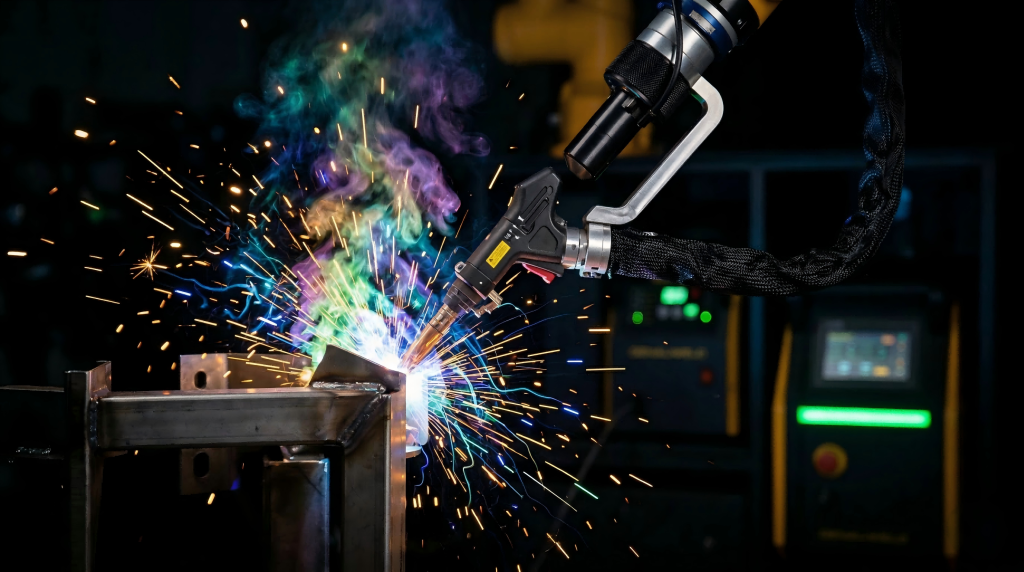
Two things shifted. The software stopped being a specialist tool: an operator can lead the arm through a weld path by hand, save it, and run it with no robotics background. The machines also got smaller and lighter, which counts when floor space is short and the cell has to roll aside for the next job.
Small and mid-size manufacturers almost never run one part for months. The work turns over weekly, sometimes daily, which is exactly where old-school fixed automation struggled. A cobot suits it: you can reteach it for a new part in an afternoon and run a short batch without a long changeover.
Research on welding in smaller enterprises lands on the same point: SME welding tends to mean varied jobs and small lot sizes, and collaborative robots are showing up as a sensible fit (University of Hannover institutional repository). For a cobot welding small shop, that adaptability counts for more than top-end speed.
The gains land in a few familiar spots. Welds come out more consistent. The arm holds the same speed and angle on pass two hundred as it did on pass one. There is none of the drift a tired hand picks up by hour seven.
On parts you run again and again, more get out the door, since the cobot keeps welding while your best fabricator handles fit-up or the joints that still need a person. And the repetitive tacking that wears people down moves off their plate.
None of this replaces a skilled welder. A cobot just standardizes the repeatable work so your best people spend their time where judgment matters. Automated welding supports consistency, throughput, and process control without forcing a full production-line overhaul.
What a Small Shop Should Evaluate Before Adding an Entry-Level Cobot Welder
Before you spec a cell or sign off on an entry level cobot welder, walk the floor with a notepad. The question is whether the work actually wants to be automated, not how to bend stubborn work to fit a robot.
Your best first jobs are the parts you build over and over, the repeat orders, and the welds that pile up behind your skilled crew. A part that lands on the bench every month with the same joints is close to ideal. The custom one-offs, where fit-up changes every time, are not where an entry level cobot welder proves itself early on.
A few factors decide success more than the robot spec sheet:
Readiness Factor | Why It Matters | What to Check |
Part repeatability | The cobot pays back fastest on parts it sees again | How many jobs repeat monthly or quarterly |
Weld path consistency | Stable paths program once and run many times | Whether parts arrive in the same orientation |
Fixture quality | Loose fixturing causes positional errors the arm cannot correct | If you have or can build repeatable fixtures |
Floor space | A cell needs room plus safe clearance | Square footage near power and gas |
Operator comfort | Adoption depends on the crew trusting the controls | Who will own programming and setup |
Safety requirements | Class 4 laser work needs zoning and shielding | Curtains, interlocks, and sensors in place |
Production volume | Volume justifies the setup time per job | Parts per run and runs per month |
None of this sidelines your tradespeople. The Hannover research makes the same observation: experienced welders are the ones who program the cell, set it up, and coax good parts out of it. The cobot takes the repetition off their hands while they keep the judgment calls, the fit-up, and the final word on quality.
Denaliweld cobot welding systems are designed around that split, with a plain user interface, presets for one-click runs, quick setup, and ROBOX switching that flips between manual and automated welding at one button.
Cost, ROI, and the Case for Affordable Cobot Welding
Judge affordable cobot welding by what the whole cell costs you, not the number on the arm. A low quote that quietly leaves out the rest will catch up with you. Budget from the start for equipment, integration, fixturing, training, safety setup, maintenance, and consumables, and a little slack for the weeks while your crew gets the hang of it.
This is where buying off a spec sheet burns people. It is tempting to line up the wattage column and grab the cheapest big number, but wattage is peak power on paper. It says nothing about whether the machine still holds that power five hours into a shift, which is what the duty cycle tells you.
An import with a thin duty cycle can match the spec line on Monday, then throttle or trip on heat mid-run and take your throughput with it. Support is the other ambush: a cheap unit from an import-only seller with no local parts can sit dead for weeks waiting on a board from overseas.
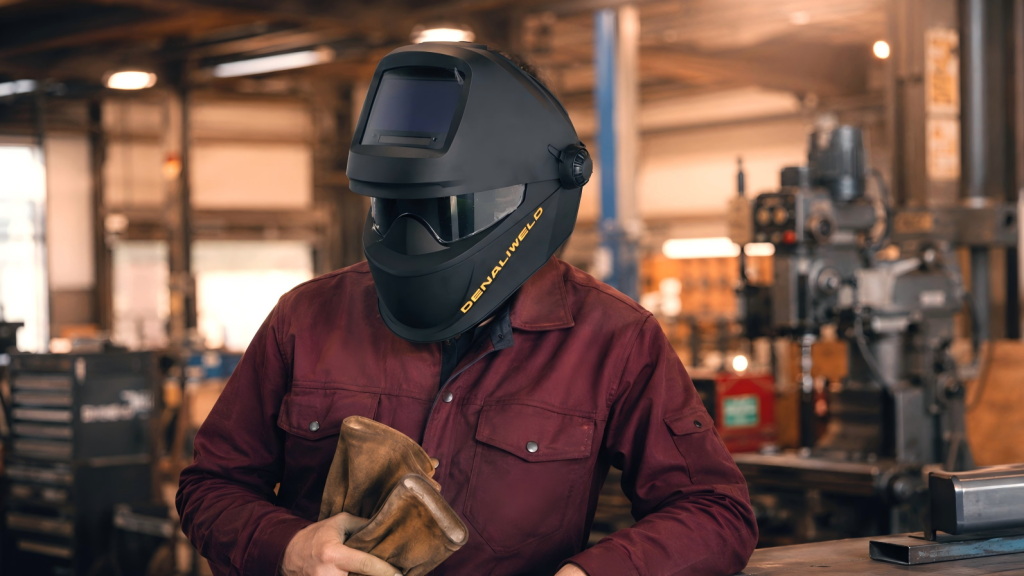
Denaliweld runs every machine at 100% duty cycle and puts it through a four-hour non-stop weld test before it ships, and the dealer network keeps parts and service close. That is the difference between affordable cobot welding and a machine that was only cheap to buy.
For a cobot welding small shop, the return shows up as steadier welds, less rework, more parts per day on the jobs that repeat, skilled hands freed for harder work, and fewer defects late in a tired shift. The mistake is automating everything at once. A cobot welding small shop is better off picking one repeatable job, tracking the labor it saves and the quality it gains, then growing from there.
Factor | Manual Welding | Cobot Welding |
Labor use | Skilled welder tied to every weld | Operator tends the cell; welder freed for skilled work |
Repeatability | Varies with fatigue and operator | Consistent path, speed, and angle |
Setup needs | Minimal per part | Programming and fixturing per job |
Flexibility | High for one-offs | High for recurring runs, lower for true one-offs |
Best-fit work | Custom, variable, low-volume | Repeatable, recurring, bottleneck parts |
Work the recurring costs and the payback yourself against Denaliweld’s breakdown of cobot welding costs, overhead, and operating. It comes down to this: a cobot earns its place when you have repeat work, a clear bottleneck, and a way to actually measure the labor, output, and quality you gain.
Conclusion: When Cobot Welding Makes Sense for Small and Mid-Size Manufacturers
Cobot welding for small manufacturers is no longer a big-plant luxury. For many smaller shops it is now a reasonable buy: easier to run, flexible enough for mixed work, and aimed at one production problem instead of a whole-shop automation bet.
The first job you choose makes or breaks it for a cobot welding small shop. Go after a repeatable part, a steady reorder, a weld that keeps failing, or the work eating your scarce skilled hours. Then run cost, training, fixturing, floor space, and safety through the same check before you sign anything. Automation pays off on fit and planning, not on the fattest spec sheet or the lowest bid.
If an entry level cobot welder is on the table for your shop, ask Denaliweld which setup fits your part mix, volume, and the duty cycle you actually run. Look over the Denaliweld cobot welding systems, see the full Denaliweld lineup, or request a quote and book a demo and map out a low-risk first move into automation.