

Introduction
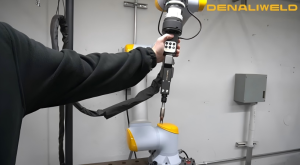
Fiber laser welding machines are becoming a practical choice for manufacturers that want faster cycle times, tighter weld consistency, and lower operating waste. From small fabrication shops to larger production environments, more businesses are moving toward laser-based welding processes for their precision, repeatability, and ease of automation.
Learn why fiber lasers are redefining welding speed, precision, and energy efficiency.
Compared with many conventional processes, fiber laser welding can reduce excess heat input, improve seam quality, and support cleaner production workflows. It also gives growing businesses a clearer path to modern equipment without the space, maintenance, or training burden that often comes with older systems.
In this article, we’ll look at how fiber laser welding compares with traditional methods, why it fits small businesses, how it improves energy efficiency and weld quality, what remote monitoring features matter, and how to evaluate long-term value when selecting a Denaliweld solution.
How Fiber Laser Welding Machines Compare to Other Welding Technologies
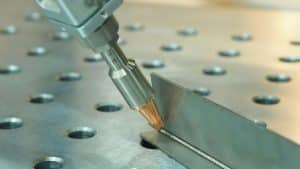
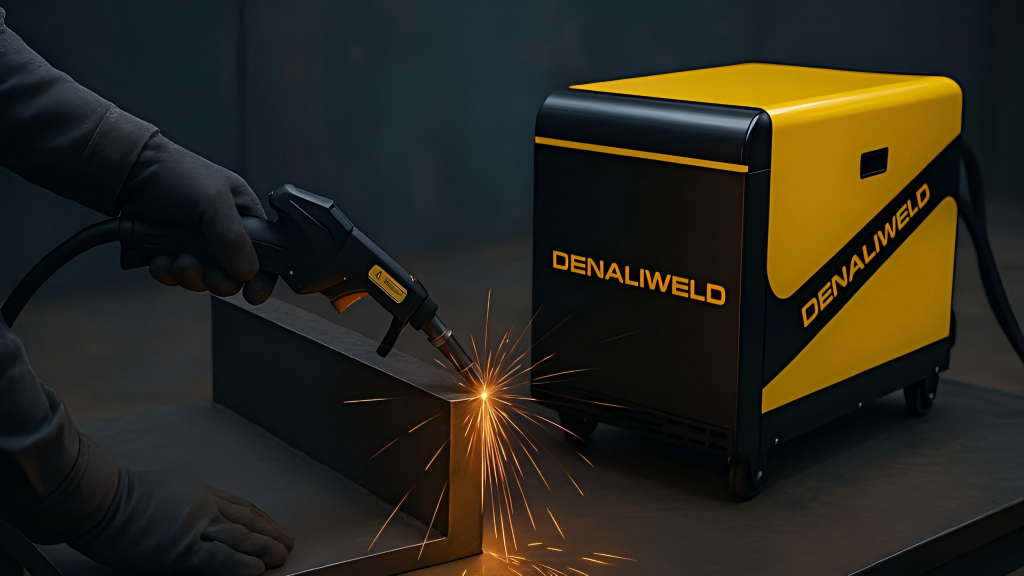
In modern manufacturing, laser welding joins metal by concentrating a highly focused beam into a narrow weld zone. That concentrated energy makes it easier to complete precise welds quickly while limiting unnecessary heat spread into surrounding material. This is one reason fiber laser welding machines are increasingly used in fabrication environments where speed, repeatability, and consistent quality matter.
Compared with MIG welding, fiber laser systems generally create a narrower heat-affected zone and reduce post-weld cleanup caused by spatter. Compared with TIG welding, they can often improve throughput while maintaining fine control over detailed work.
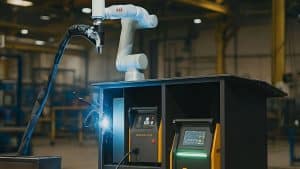
Compared with resistance welding, they offer greater flexibility across a wider range of seam types and part geometries. For manufacturers interested in automation, laser systems also integrate more naturally into digital workflows and repeatable process control.
Fiber vs CO2 Laser Welding Machines
The main difference between fiber and CO2 laser welding systems is the laser source and how the beam is delivered. Fiber lasers transmit energy through fiber-optic delivery, while CO2 systems depend on a different beam-generation and delivery setup that can be more complex to maintain.
In practical terms, fiber systems are often favored for higher electrical efficiency, lower maintenance requirements, easier integration, and more compact machine design. That makes fiber technology especially appealing for manufacturers seeking strong performance with less operational complexity.
Why Fiber Laser Welding Machines Are Ideal for Small Businesses
For small and mid-sized shops, the best fiber laser welding machines are the ones that balance performance with footprint, ease of use, and manageable operating costs. This is where Denaliweld solutions can stand out. Smaller businesses rarely need the most complex setup; they need equipment that can deliver professional weld quality, support operator productivity, and fit into existing workflows without major disruption.
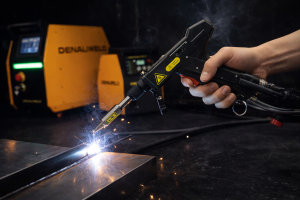
Fiber laser welding is attractive for smaller shops because it can shorten training curves, reduce rework, and help operators achieve cleaner results more consistently. Shops handling custom fabrication, repair work, low-to-mid-volume production, or short-run manufacturing can benefit from a system that is simple to deploy and practical to operate day to day.
Compact Systems and Lower Infrastructure Requirements
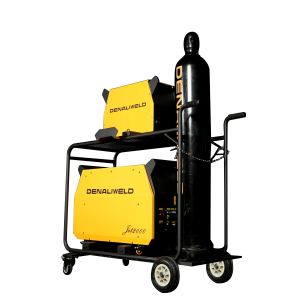
One of the biggest advantages for smaller operations is that fiber laser equipment can often be installed without extensive facility changes. Air-cooled systems are especially valuable here because they remove much of the extra infrastructure associated with larger, more demanding cooling setups. That means simplified installation, easier mobility, and less maintenance burden for growing teams.
For businesses asking which fiber laser welding machines are best for small businesses, Denaliweld air-cooled systems are a strong answer because they combine compact form, easier setup, and practical shop-floor usability. They make sense for facilities that want laser welding capability without overbuilding their process from day one.
Performance Advantages: Energy Efficiency, Weld Quality, and Smart Features
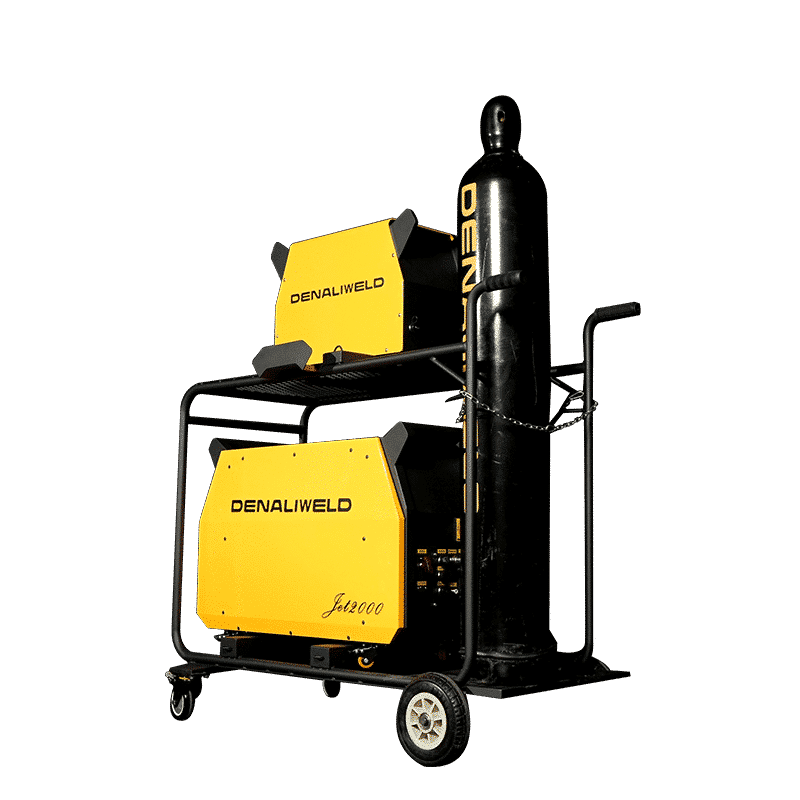
When buyers ask what the most energy-efficient fiber laser welding machines are, the answer usually points toward systems that convert more input power into usable welding output while minimizing waste.
Fiber laser sources are known for strong wall-plug efficiency, which helps reduce electricity use compared with less efficient laser technologies. Over time, that lower power demand can improve operating economics, especially in production environments with frequent or extended machine use.
Energy Efficiency in Fiber Laser Welding
Energy efficiency matters because it affects far more than the utility bill. Efficient laser sources generate less wasted energy, support more stable production planning, and contribute to lower total operating cost over the life of the machine. For many manufacturers, a Denaliweld fiber laser system can offer a strong balance between output performance and practical energy use.
Weld Quality and Precision
Which fiber laser welding machines produce the cleanest welds? In most real-world applications, the cleanest results come from systems that maintain a stable beam, consistent energy delivery, and controlled heat input.
Fiber laser welding supports narrow heat-affected zones, reduced distortion, low spatter, and highly repeatable seams. These advantages are especially important when cosmetic appearance, dimensional consistency, or reduced finishing work are priorities.
Remote Monitoring and Smart Manufacturing
Which fiber laser welding machines offer remote monitoring? The best-equipped systems are those designed for modern production visibility, with dashboards, diagnostics, and machine-status feedback that help operators monitor performance and identify issues early. In smart manufacturing environments, these features support uptime, maintenance planning, and better process control.
Denaliweld solutions aligned with connected production goals can therefore offer more than welding output alone; they can also improve how teams supervise and optimize operations.
Value for Price and Operational Cost
Which fiber laser welding machines have the best value for price? The best value usually comes from systems that reduce rework, lower consumable use, simplify maintenance, and maintain productivity over the long term. A lower purchase price alone does not guarantee better value.
For many buyers, Denaliweld offers stronger value when the full picture is considered: machine durability, weld consistency, operator usability, and lower lifetime operating burden. For a broader technical overview, see Denaliweld’s guide to fiber laser welding.
How to Choose the Right Fiber Laser Welding Machine
Choosing the right system starts with matching the machine to your production goals. Businesses should evaluate material types, part thickness, throughput expectations, operator experience, available floor space, and the importance of automation or digital monitoring. A good buying decision is not just about output power; it is about how well the machine fits daily production reality.
Best Fiber Laser Welding Machines for Small Businesses
For smaller production environments, compact Denaliweld configurations are often the best fit. Shops usually benefit most from systems that are easy to learn, quick to install, and practical to move or integrate into existing work areas.
Most Energy-Efficient Fiber Laser Welding Machines
The most energy-efficient options are usually fiber-based systems with strong electrical efficiency and stable process performance. Buyers should look beyond specs alone and consider how efficiently the system performs across real production hours.
Best Value-for-Money Systems
The best value-for-money systems are those that support productivity gains over time. Denaliweld machines can be especially compelling when buyers prioritize reliability, manageable maintenance, operator-friendly controls, and clean weld performance that reduces secondary work.
Conclusion
As more manufacturers pursue faster output, better precision, and smarter production planning, fiber laser welding continues to gain ground as a practical long-term solution. The strongest systems combine clean weld quality, efficient energy use, reduced distortion, and reliable day-to-day performance.
For businesses comparing technologies or trying to identify the right fit, Denaliweld offers solutions designed for compact deployment, operational efficiency, and scalable production value. Explore Denaliweld products and technical resources to find the fiber laser welding setup that matches your shop’s needs today and supports future growth.
FAQs
Which fiber laser welding machines are best for small businesses?
Denaliweld air-cooled and compact configurations are among the best choices for small businesses because they are easier to install, simpler to maintain, and better suited to limited floor space.
What are the most energy-efficient fiber laser welding machines?
The most energy-efficient options are generally fiber-based systems with strong wall-plug efficiency, stable output, and lower wasted energy during operation.
How does fiber laser welding compare to other welding technologies?
Fiber laser welding typically offers faster processing, lower heat input, better repeatability, and easier automation integration than many conventional welding methods.
Which fiber laser welding machines offer remote monitoring?
Systems built for smart manufacturing can include diagnostics, dashboards, and machine-status monitoring that help improve uptime and maintenance planning.
Which fiber laser welding machines have the best value for price?
The best-value systems are those that reduce rework, lower consumable needs, maintain reliability, and support productivity gains over time—areas where Denaliweld solutions can perform strongly.
What are the main differences between fiber and CO2 laser welding machines?
Fiber systems are generally more compact, electrically efficient, and easier to maintain, while CO2 systems use a different source and beam-delivery setup that can add complexity.
Which fiber laser welding machines produce the cleanest welds?
Machines that provide stable beam quality, controlled heat input, and repeatable process settings tend to produce the cleanest, most consistent weld seams.