

Introduction
Laser welding concentrates energy into a narrow fusion zone. That is one reason it can produce fast, low-distortion welds, but it also means the process sees joint geometry very clearly. A small gap, edge mismatch, angular error, or beam offset can change penetration even when power and travel speed remain unchanged. For manufacturing engineers, laser welding joint design therefore has to be treated as part of the process rather than a drawing detail. Joint type, fit-up, clamping, beam position, and the required fusion depth all need to work together. The sections below connect those variables to common butt, lap, fillet, and T-joint applications.
How joint type changes laser welding behavior
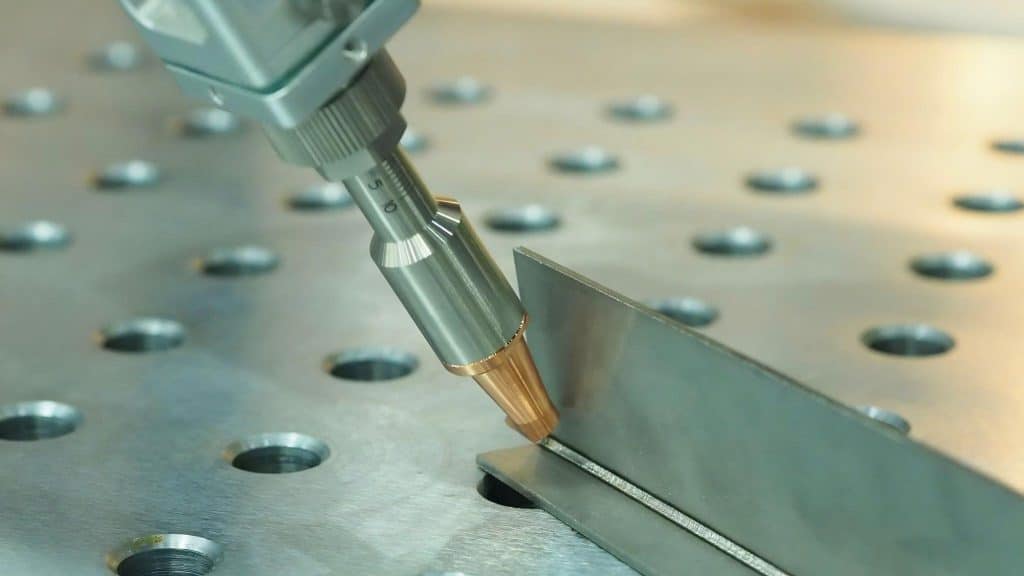
Different laser welding joint types present different amounts of material beneath the beam and different paths to the joint root. In a butt joint, two edges meet directly under the beam. The arrangement is efficient and well suited to full-depth fusion, but it is sensitive to edge location and open gaps. If the gap approaches the beam width, energy can pass through the joint instead of coupling effectively into both faces. TWI guidance on laser-welding joint fit-up notes that autogenous butt-joint laser welding often requires gaps below roughly 10% of material thickness; that is a useful reference point, not a universal acceptance limit.
Butt and lap joints
Lap joints place one sheet over another, so there is material beneath the beam even when the top edge is not perfectly located. That can make beam placement more forgiving than a square butt joint, although the faying-surface gap, overlap, coating condition, and required fusion width still matter.
Fillet and T-joints
Fillet and T-joints add a corner or root that the laser must reach. Beam angle and part position are critical because a small lateral shift can leave one member well fused and the root underfused. For high-stress work there is no single best joint type. The correct choice follows the load path, material thickness, required effective throat or fusion area, access for inspection, and the design code governing the assembly. A complete-penetration butt joint may be appropriate for one tensile load case, while a properly sized T- or fillet joint may be better for another.
Why fit-up and gap tolerance matter
Laser welding fit-up is more demanding than processes with a broader heat source because the focused spot and molten zone are narrow. A variable gap changes how much material is available to absorb the beam and can alter bead width, root shape, penetration, and filler demand from one section of the seam to the next. Edge mismatch has a different effect: the joint may remain closed, but the beam no longer intersects both members at the intended location.
Alignment and part positioning
Clamping should hold the joint line within the programmed beam path and prevent movement as the material heats. The fixture does not need to be complicated, but it does need to repeat. If angular misalignment or edge mismatch changes with every load, a parameter set that produced a sound first article may fail later parts even though the machine settings have not changed.
Bridging gaps with process adjustments
When zero-gap fit-up is unrealistic, the process window can be widened. Research on adaptive filler-wire control for varying gap width illustrates why filler addition is useful when joint opening changes along a seam. Filler wire adds metal to the joint, while beam oscillation or weaving broadens the heated area so the laser is less likely to miss one joint face. Controlled changes to focus position can also modify spot size and energy distribution. These techniques improve tolerance, but they are not substitutes for dimensional control.
What controls weld penetration and strength?
Laser weld penetration is the result of several variables acting together: laser power, travel speed, focal position, beam delivery, material absorptivity and thickness, joint geometry, and actual fit-up. Increasing power or reducing travel speed can increase penetration, but neither should be treated as an isolated correction. Too much energy can cause burn-through, an unstable root, excessive reinforcement, or unnecessary heat input, especially on thin sections.
Complete joint penetration means that the fusion zone extends through the intended joint thickness so there is no unfused root where full-depth fusion is required. It is a design and acceptance condition, not a universal target for every weld. A lap seam, for example, may be specified by fusion width and penetration into the lower sheet rather than full penetration through both members.
Penetration is not a standalone quality metric
Greater depth does not automatically mean a stronger joint. Insufficient penetration reduces the effective load-bearing area, but excessive penetration can damage the root or nearby features. Strength also depends on fusion width, defects such as porosity or lack of fusion, metallurgical condition, residual stress, and how the joint is loaded.
Keeping penetration consistent
Repeatable fit-up makes a validated parameter set transferable from one part to the next. Cross-sections are a direct way to confirm fusion geometry during development. Research on in-process weld-depth measurement also shows that optical monitoring can track penetration behavior, but production acceptance still depends on the validated inspection plan.
Common fit-up problems and their weld effects
Most fit-up failures show up in predictable ways. A changing butt-joint gap can produce fluctuating penetration, underfill, incomplete fusion, or a bead that changes width along the seam. Edge mismatch can move the effective joint root away from the beam centerline and create asymmetric fusion. Angular misalignment changes where the focused spot enters the joint. Weak clamping can allow thermal movement, so a correct starting gap becomes an incorrect gap halfway through the weld.
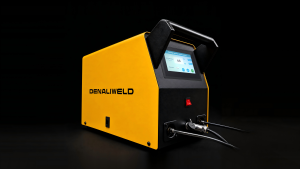
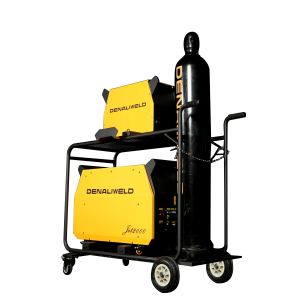
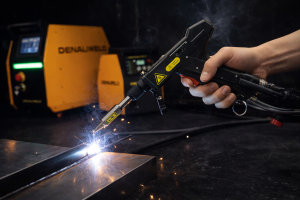
The corrective sequence should start with the part, not the power dial. Check edge condition, gap, overlap, alignment, fixture contact, and clamping force. Then confirm beam position and the welding parameters against the actual material and thickness. DenaliWeld’s laser welding machine range and Air-Cooled Laser Welding Machine provide preset process controls, but those settings still depend on presenting a repeatable joint to the beam.
Conclusion
Joint design tells the laser where fusion must occur; fit-up determines whether that geometry is actually present on the shop floor. Consistent laser welding quality comes from treating gap tolerance, alignment, clamping, beam position, and penetration requirements as one process window. When a defect appears, correcting the joint presentation is often more effective than changing power or speed first. For production work, the strongest approach is to validate the real joint geometry, document the fixture condition, and qualify parameters against the required fusion and inspection criteria. For application-specific equipment or process questions, contact DenaliWeld.
FAQs
What factors influence the penetration depth in laser welding processes?
Penetration is governed by power density and heat input, which are shaped by laser power, travel speed, focal position, spot size, material properties and thickness, joint geometry, and fit-up. Beam alignment also matters: a well-set process can still lose depth if the laser is no longer centered on the intended joint.
How does laser weld penetration affect the overall strength of the weld?
Insufficient penetration reduces the fused load-bearing area and can leave an unfused root. Adequate penetration supports the designed joint section, but more depth is not always better. Strength also depends on fusion width, defect level, material condition, residual stress, and the direction and magnitude of service loading.
What is complete joint penetration in laser welding?
Complete joint penetration means the weld fusion extends through the full joint thickness where full-depth fusion is specified, leaving no unfused root. It is commonly relevant to butt joints carrying structural loads, but it is not required for every joint. The drawing or qualified procedure should define the required penetration condition.
Which welding joint type is best for high-stress applications?
There is no universal best joint. The selection depends on load direction, section thickness, available fusion area, fatigue exposure, accessibility, and inspection requirements. Full-penetration butt joints can be efficient for direct load transfer, while T- or fillet joints may be appropriate when the structure and qualified design call for them.
How much joint gap can laser welding tolerate?
Allowable gap is process- and application-specific. TWI notes that autogenous laser butt welding often requires gaps below about 10% of material thickness. Filler wire, beam oscillation, hybrid processes, and adaptive control can widen that window, but the final limit must be established by procedure qualification on the actual joint.