

2026 U.S. Section 179 Deduction Limits Increase
Section 179 deduction limits increased for the 2026 federal tax year. Businesses that purchase and place qualifying machinery or other capital equipment in service during 2026 may elect to expense eligible costs, subject to the statutory limits and their taxable income. Welding, cleaning, cutting, and automation systems may fall within this category when the property and business-use requirements are met.
Section 179 Deduction Limits by Tax Year
Tax Year | Maximum Deduction | Phase-Out Begins | Fully Phased Out |
2024 | $1,220,000 | $3,050,000 | $4,270,000 |
2025 | $2,500,000 | $4,000,000 | $6,500,000 |
2026 | $2,560,000 | $4,090,000 | $6,650,000 |
Source: [IRS Publication 946]; 2026 figures per [Revenue Procedure 2025-32]. A separate cap of $32,000 applies to sport utility vehicles placed in service in 2026.
Public Law 119-21, commonly known as the One Big Beautiful Bill Act, was signed into law on July 4, 2025. It raised the maximum Section 179 deduction to $2.5 million and the phase-out threshold to $4 million for tax years beginning after December 31, 2024. Both amounts are indexed for inflation for tax years beginning after December 31, 2025.
For 2026, the maximum deduction increased to $2.56 million and the phase-out threshold to $4.09 million. The IRS published the figures in Revenue Procedure 2025-32 and announced the annual inflation adjustments in IR-2025-103.
Basic Section 179 Eligibility
Section 179 is available for many types of new and used qualifying business property, including manufacturing machinery and equipment. Basic requirements include:
- The property is acquired by purchase and used more than 50 percent in an active trade or business.
- The property is placed in service during the tax year for which the deduction is claimed.
- The taxpayer makes the election on IRS Form 4562, filed with the federal tax return.
“Placed in service” does not necessarily mean the purchase date or delivery date. The IRS treats property as placed in service when it is ready and available for its assigned use. For equipment that requires installation, electrical work, ventilation, operator training, or production-line integration, the completion schedule may determine the tax year in which a deduction can be claimed.
The deduction is also limited by taxable income from the active conduct of a trade or business. A business may elect to expense all or part of the qualifying cost and may allocate the election among multiple eligible assets. Amounts disallowed by the business-income limit may generally be carried forward, subject to the applicable rules. If business use later falls to 50 percent or less, part of a previously claimed deduction may have to be recaptured.
The Instructions for Form 4562 and IRS Publication 946 explain qualifying property, the election process, business-income limits, carryforwards, and recapture.
Tax Treatment With and Without a Section 179 Election
| Without Section 179 | With Section 179 |
Recovery method | Modified Accelerated Cost Recovery System (MACRS) | Full expensing, up to the annual limit |
Typical timeline | Spread over 5 or 7 years | Deducted entirely in the year placed in service |
Remaining basis above the 179 limit | N/A | Generally eligible for bonus depreciation, currently 100% for qualifying property placed in service after January 19, 2025 |
Section 179, bonus depreciation, and MACRS are separate parts of the cost-recovery calculation. Under the IRS ordering rules, the Section 179 deduction is taken first, the special depreciation allowance is applied to eligible remaining basis, and regular MACRS depreciation follows. Current IRS guidance provides a 100 percent special depreciation allowance for certain qualified property acquired and placed in service after January 19, 2025, unless the taxpayer makes an applicable election.
For manufacturers and fabrication shops, the higher 2026 limits may permit more qualifying equipment cost to be deducted in the year the equipment is placed in service. The result still depends on the amount of property purchased, taxable income, bonus-depreciation eligibility, and the taxpayer’s elections.

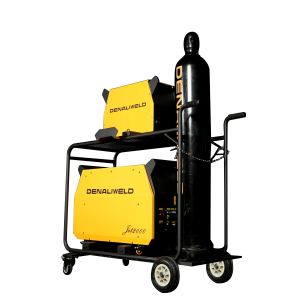
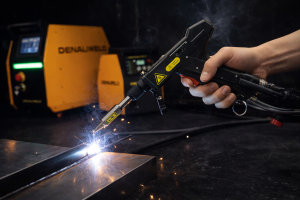
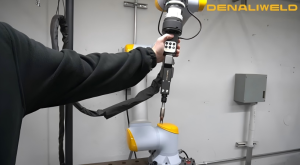
DenaliWeld’s lineup falls into these categories — though whether a specific purchase ultimately qualifies still depends on the buyer’s business use, placed-in-service date, and the other requirements above, not on the equipment itself. :
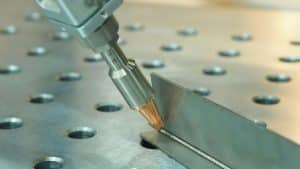
These systems cover handheld welding, surface cleaning, sheet-metal cutting, collaborative automation, and robotic welding. Selection depends on the production process, material, throughput, facility requirements, and whether the equipment will operate as a standalone unit or as part of an automated cell.
DenaliWeld designs and manufactures its machines at its Chicago-area facility. Certification details and model-specific information are provided on the the relevant product pages.
Note on eligibility: Section 179 treatment depends on the property, the date it is placed in service, its business-use percentage, the taxpayer’s total qualifying equipment purchases, and taxable income. State treatment may differ from federal treatment. DenaliWeld recommends reviewing IRS Publication 946 and the Instructions for Form 4562 with a qualified tax professional before relying on the deduction in an equipment-purchase decision.