

Introduction
Welding safety starts with PPE built for compliance, not a helmet and gloves pulled off whatever shelf was closest. Protective gear is not interchangeable across processes. An auto-darkening helmet rated for stick welding does nothing against a 1070 nm fiber laser beam, and thin TIG gloves will not survive MIG spatter. This guide covers what belongs in a complete PPE set and how helmet requirements change between weekend DIY work and daily production shifts. As a laser welder supplier, Denaliweld builds both the welding systems and the safety equipment around them.
Can You Recommend the Best Personal Protective Equipment for Welders?
The best personal protective equipment for welders is the set matched to the process, material, amperage, and environment rather than the most expensive item on the shelf. Four categories cover almost every shop: head and face protection, eye protection worn underneath it, hand and body protection, and barriers for everyone else in the room.
Welding Helmets and Face Shields
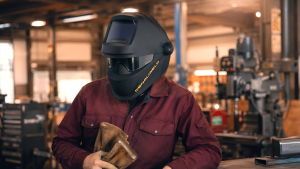
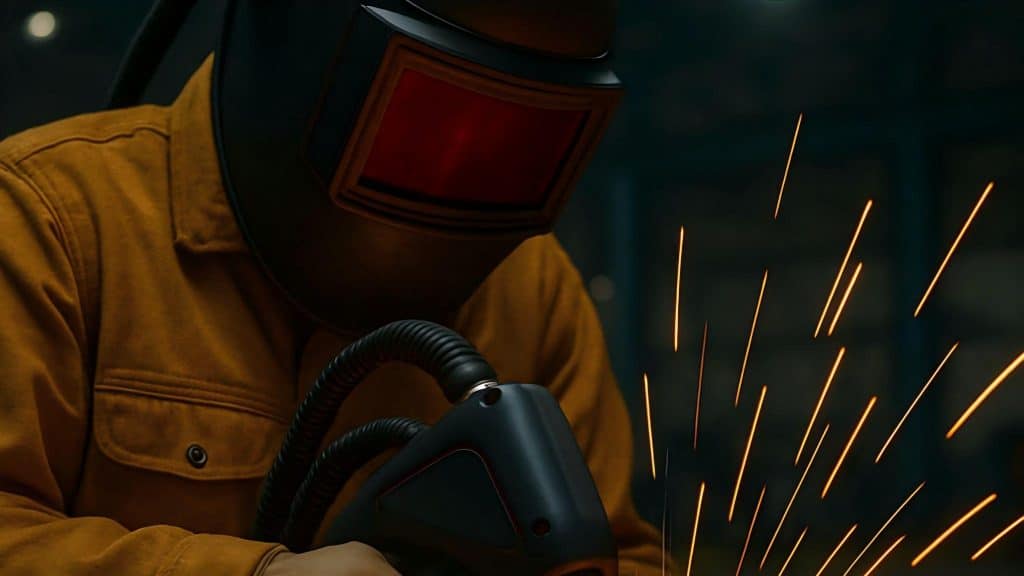
Arc work is covered by a passive helmet with a fixed filter or an auto-darkening helmet that switches when the arc strikes. Fiber laser welding is different, and the American Welding Society (AWS) states plainly that standard welding helmets do not protect against laser beam hazards. Denaliweld’s Laser Protective Helmet handles both in one shell: an outer variable-light module blocks welding light and UV, while inner laser protection glass filters the 1060 to 1100 nm fiber wavelength. Face shields stay secondary, covering grinding, fit-up, and overhead work.

Safety Glasses and Eye Protection
Safety glasses with side shields belong under the helmet, not in place of it. OSHA requires eye and face protection during welding, and ANSI Z87.1 is the standard those glasses are built to. The helmet goes up between passes for chipping and inspection, and that is when a particle finds an unprotected eye. OSHA’s eye protection fact sheet lists minimum filter shades by operation and current. Laser work is separate: eyewear must match the beam wavelength at the optical density the manufacturer specifies.
Gloves, Sleeves, and Body Protection
Glove choice follows the heat and the task. Thin goatskin gives TIG welders the control to feed filler by hand. MIG and stick work calls for heavier cowhide or elkskin that absorbs spatter and radiant heat. Laser welding produces less spatter, though AWS still requires heat-resistant gloves inside a laser controlled area. Flame-resistant sleeves and a jacket cut UV exposure to the forearms and neck.
Work Area Barriers and Curtains
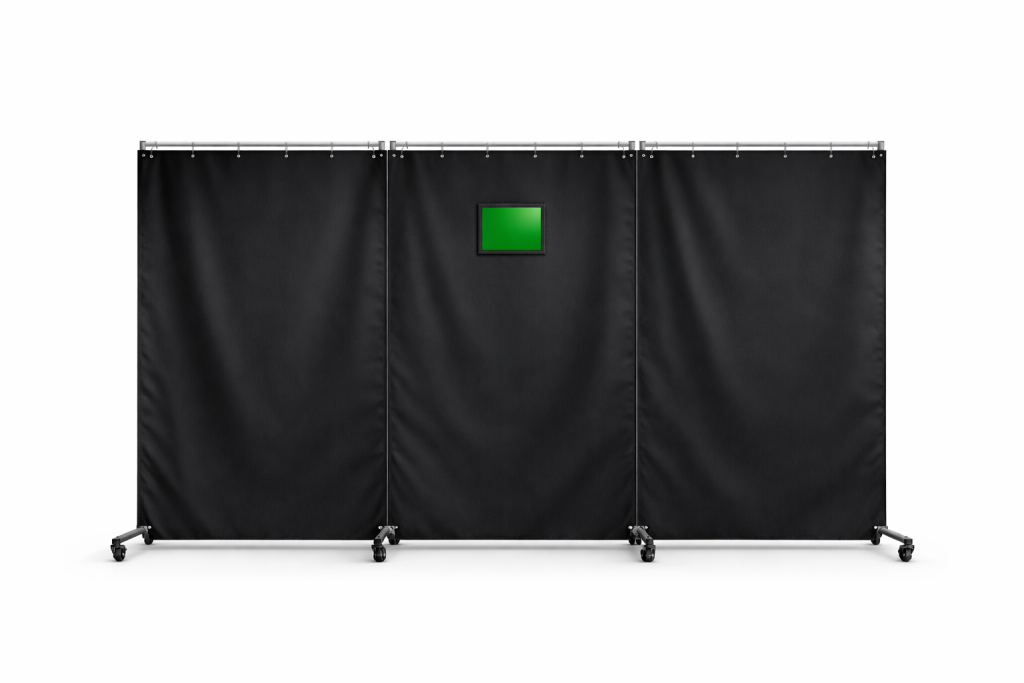
Personal gear protects the operator, not the machinist twenty feet away. Fiber laser beams reflect off aluminum, copper, and polished stainless, and a specular reflection can travel a long distance across a wide cone angle, which is why a Class 4 cell needs a defined boundary. A laser safety curtain is the practical version of that boundary where a fixed enclosure is not possible. Denaliweld’s panels are NFPA 701:2023 flame retardant, rated above 543 W/cm² PEL at 1070 nm, certified to IEC 60825-1/13 and CE/EN 60825-1/4, and measure 2055 mm by 1500 mm at 1.4 mm thickness.
What Are the Best Welding Helmets for DIY Projects and Professional Use?
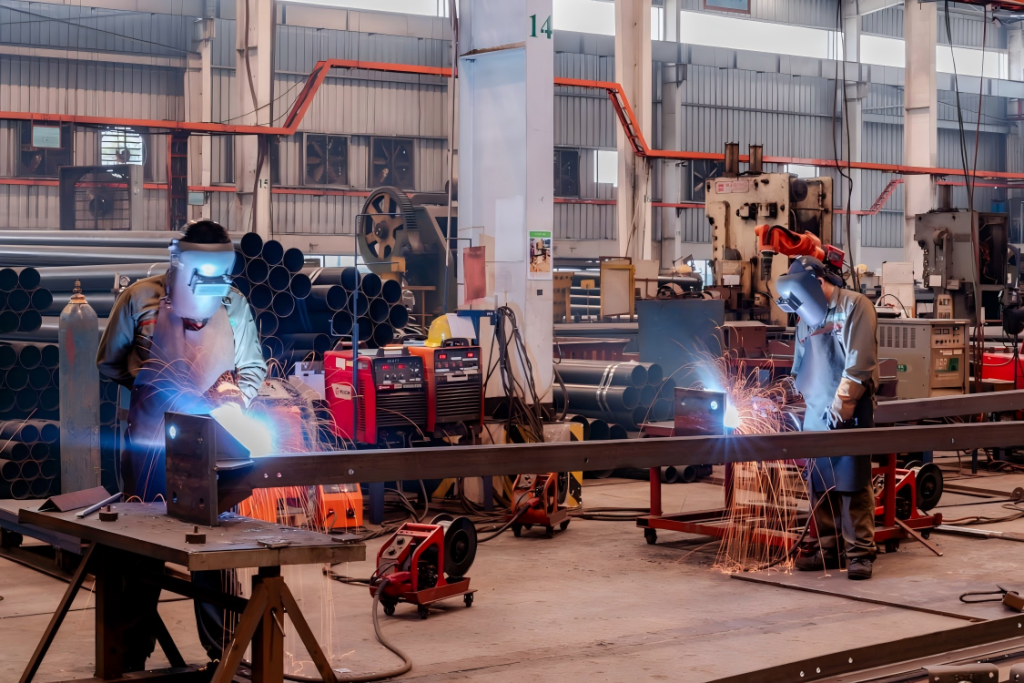
There is no single best welding helmet, because DIY and production welders solve different problems. A hobbyist welds in short sessions and needs adequate protection at a home shop budget. A production welder wears the same helmet for most of a shift and needs it comfortable and consistent through thousands of arc strikes.
Helmets for DIY and Hobby Use
For occasional work, prioritize shade range, weight, and visibility over headline specifications. A shade 9 to 13 range handles most MIG, TIG, and stick jobs a home shop takes on. Reaction time matters less than the marketing suggests; the gap between 1/25,000 and 1/10,000 of a second is not what a weekend welder notices, but a lens that fails to darken reliably is. Grind mode lets the same helmet cover preparation, and adjustable sensitivity keeps low-amperage TIG from making the lens flicker.
Helmets for Professional Production
Daily use shifts the priorities to durability, switching speed, viewing area, and compatibility with respirators or communication systems. A larger window reduces the head movement needed to follow a long seam, and a better-balanced shell reduces neck fatigue across a shift. Consistency beats peak specification: a helmet that still darkens the same way after 10,000 arcs is worth more than one with a better spec sheet and a failing sensor. In fiber laser production, Denaliweld’s dual-layer Laser Protective Helmet adds beam-specific filtering that an arc helmet cannot provide, and accepts a Denaliweld respirator when fume load is high.
Key Features That Separate DIY and Professional Models
Feature | DIY and hobby use | Professional production |
Switching speed | Standard rates are adequate | Fast and consistent across long shifts |
Viewing area | Smaller window acceptable | Larger window for long seams |
Power source | Solar assist with battery backup | Replaceable batteries for shift reliability |
Weight and balance | Comfort over short sessions | Balance tuned for all-day wear |
Adjustability | Basic shade and sensitivity control | Shade, sensitivity, delay, headgear |
Accessory support | Rarely needed | Respirator and communication compatibility |
Laser environments | Not typically required | Wavelength-specific filtering required |
Price is a weak dividing line. Compact helmets suit professionals moving between job sites, and feature-heavy models make sense for hobbyists whose work is growing. The better test is hours worn per week, and whether a laser runs in the same room.
How to Choose and Maintain a Complete Welding PPE Setup
The framework is short: list the processes the shop runs, list the hazards each creates, match the gear, then check the result against the standards that apply.
Matching PPE to the Welding Process
Arc welding hazards are well documented: UV and IR radiation, spatter, fume, and electrical risk. Laser welding adds reflected beam exposure. The AWS handheld laser welding safety overview notes that direct or reflected high-power beams are hazardous to view under any condition, and that specular reflections from highly reflective metals can cause instantaneous, permanent eye and skin damage. In practice that means wavelength-rated eyewear, a laser welding helmet, and a contained work area rather than an open bay.
Inspection and Replacement Schedules
Inspect daily. Cracked helmet lenses, glove leather worn thin at the thumb, scratched safety glasses, and loose curtain fasteners all reduce protection without looking broken. Denaliweld’s laser safety guidelines cover setup requirements and manufacturer instructions for laser cells. Put consumables such as cover lenses and gloves on a replacement schedule tied to hours worked.
Conclusion
The best welding PPE is not a brand. It is a set matched to the process, inspected regularly, and built to standards that hold up under review. DIY welders and professionals both need a helmet, eye protection underneath it, gloves suited to the process, and body protection against UV and heat. What changes is durability, feature depth, and how hard the gear gets worked. Shops adding fiber laser welding carry one extra requirement that is not optional: wavelength-specific filtering and a contained work zone. Denaliweld’s laser safety curtains and protective equipment are a practical starting point.
FAQs
Can you recommend the best personal protective equipment for welders?
The best set covers four areas: a helmet matched to the process, safety glasses with side shields underneath, gloves suited to the heat and dexterity required, and flame-resistant clothing. Add barriers where others share the space. For fiber laser work, eyewear and helmets must be rated for the beam wavelength.
What are the best welding helmets for DIY projects and professional use?
For DIY use, choose a lightweight auto-darkening helmet with a shade 9 to 13 range, grind mode, and adjustable sensitivity. For production, prioritize a larger viewing area, consistent switching across thousands of arcs, and respirator compatibility. Laser environments require a wavelength-specific filter layer such as 1060 to 1100 nm.
Do I need safety glasses if I already wear a welding helmet?
Yes. OSHA requires eye and face protection during welding, and safety glasses meeting ANSI Z87.1 belong under the helmet. The helmet gets lifted for chipping, grinding, and inspection, which is when a large share of eye injuries happen. Side shields also cover particles thrown from adjacent stations.
How often should welding gloves and sleeves be replaced?
Inspect them at the start of every shift and replace on a schedule rather than at failure. Watch for thinning leather at the thumb and index finger, stiff or charred areas, burn-through, and split seams. Heavy production use often means monthly replacement; occasional DIY use stretches much longer.
What standards should welding PPE meet?
For eye and face protection, ANSI Z87.1 is the reference standard and OSHA sets the requirement to use it. Laser work falls under ANSI Z136.1 and Z136.9 in the United States, with IEC 60825-1 applied internationally. Curtains should carry documented flame-retardant and laser-blocking ratings for the wavelength in use.